Book Paphos Archaeological Park tickets online or at the gate. Explore ancient mosaics, guided tours, best visiting times and nearby attractions in Kato Paphos.
What is Paphos Archaeological Park
Paphos Archaeological Park sits on the western edge of Kato Paphos, covering a stretch of coastal land that's been excavated since the 1960s and still isn't fully dug up. If you're deciding whether Paphos Archaeological Park tickets are worth the money, the short answer is yes — this is one of the densest concentrations of Roman-era mosaic floors anywhere in the Mediterranean, and you won't find anything comparable on a casual beach holiday elsewhere in Cyprus.
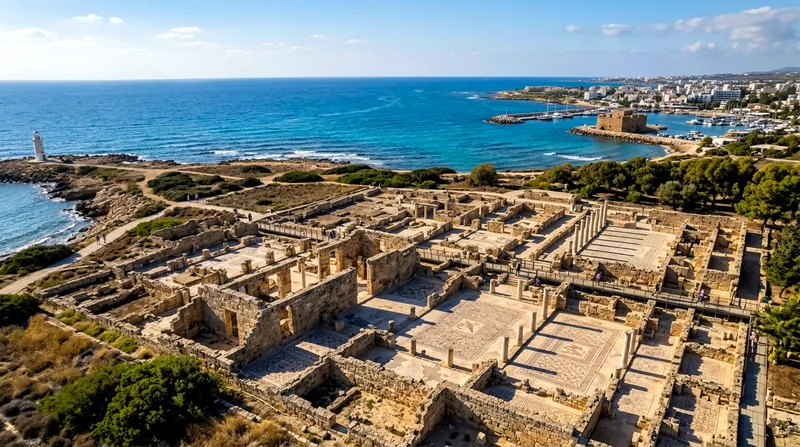
The site works as an open-air museum rather than a single building. Paths wind between excavated villas, a Roman odeon, remains of a medieval fort, and sections of the ancient agora. Some areas are roofed to protect mosaics from weather and UV damage; others are open to the sky, which matters a lot for your visit timing — more on that later. The scale surprises first-time visitors. Budget at least two hours, closer to three if you read every information panel.
UNESCO World Heritage site overview
The park was inscribed as part of the "Paphos" UNESCO World Heritage Site in 1980, recognized for its exceptional Roman mosaics and continuous record of occupation from the Hellenistic through Byzantine periods. Unlike Pompeii, where the appeal is a frozen moment in time, Paphos layers centuries on top of each other — Roman villas sit near Byzantine fortifications, Hellenistic graves overlap Ottoman remains in nearby areas. The Cyprus Tourism Organisation lists it as one of the island's top cultural draws, and it's the main reason history-focused travelers add Paphos to an itinerary that might otherwise center on Limassol or Ayia Napa's beaches.
Key sites: villas, mosaics and Roman history
The House of Dionysos is the headline act — a 2nd-century villa with over 500 square meters of mosaic flooring depicting mythological scenes, including Dionysos's triumphal procession and the Four Seasons. The House of Aion, excavated later and covering roughly 500 square meters as well, holds mosaics considered even more technically refined by some archaeologists, including a panel showing the beauty contest between Cassiopeia and the Nereids. Don't skip the House of Theseus or the House of Orpheus nearby — smaller, less crowded, and still carrying detailed floor work. The Roman odeon, partially restored, occasionally hosts cultural events and gives a clear sense of scale that the mosaic houses, viewed from raised walkways, can't quite match.
How to Visit: Independent vs Guided Tours
This is the real decision point, and it comes down to how much context you want versus how much control you want over pacing. Independent visits are cheaper and let you linger at the House of Aion for twenty minutes if that's what grabs you. Guided tours cost more but turn silent mosaic floors into stories — without a guide or an audio tool, you'll miss which myth is depicted where, and the panels, while informative, don't cover everything.
Neither option is wrong. Families with restless kids often do better self-guided, moving fast between shaded sections and letting children run the open ground near the odeon. Couples and solo travelers with a genuine interest in Roman history tend to get more out of a guide, paid or audio.
Self-guided exploration tips
Pick up the printed site map at the ticket office — it's usually included and shows a logical loop starting at the House of Dionysos, moving through Theseus and Aion, then out to the odeon and fort remains. Walk the mosaic houses first thing, since the roofed structures get crowded with tour groups by mid-morning and the light inside is better earlier. Reading the on-site panels carefully adds real value here; they're more detailed than at many European archaeological sites, covering excavation history alongside the mythology. Wear shoes with grip — the raised wooden walkways inside the mosaic houses can be slick when the site has been recently cleaned.
Booking a guided tour
Guided tour Paphos ruins options typically run as small-group walking tours lasting 60 to 90 minutes, sometimes bundled with other Kato Paphos sites like the Tombs of the Kings a short drive away. Some operators combine the park with a harbour walk or a visit to the Paphos Mosaics Museum reproductions. If you prefer not to commit to a group schedule, audio guide devices — often available to rent at or near the entrance — give similar narrative depth at your own pace, which suits solo travelers and couples who don't want to match a stranger's walking speed. Check current prices and availability for guided options before you book, since offerings and group sizes change seasonally.
Tickets and Entry Information
Paphos park price has stayed modest compared to similar UNESCO sites in Italy or Greece — expect a standard adult entry fee in the single digits of euros, with reduced rates for students, seniors, and children, and under-a-certain-age admission typically free. These figures move occasionally, so treat any number you see online as a guide and confirm the current fee at the gate or official booking page before you travel. Combined tickets covering multiple Paphos sites (the park plus the Tombs of the Kings, for instance) sometimes offer a modest saving over paying separately — worth asking about at the ticket window.
Independent entry is cheapest and most flexible, while guided or combined tickets add context and convenience at a higher cost.
Paphos Archaeological Park tickets and visit options compared
| Visit option | Typical cost | Duration | Best for |
|---|---|---|---|
| Standard adult ticket (self-guided) | Low (single-digit euros) | 2-3 hours | Independent travelers, budget-conscious visitors |
| Reduced ticket (student/senior) | Lower than standard | 2-3 hours | Students, seniors with ID |
| Combined park + Tombs of the Kings | Modest saving vs separate | Half day | Travelers doing both UNESCO sites same day |
| Audio guide rental | Small add-on fee | Self-paced | Solo travelers, couples wanting narrative depth |
| Small-group guided tour | Higher, per person | 60-90 minutes | First-time visitors wanting full context |
Typical figures only; confirm exact prices and hours on the official site or at the gate before you travel.
Ticket types and access points
There's one main entrance near Paphos Harbour, which is also where the ticket office sits. A single ticket covers the whole park — there's no need to buy separate access for the House of Dionysos versus the odeon or fort area. Wheelchair and stroller access is partial: main pathways are paved or compacted gravel, but the raised walkways inside mosaic houses have steps in places, and some fringe areas (the fort remains, parts of the agora) involve uneven ground. If mobility is a concern, call ahead or check with site staff about which sections are currently accessible, since conservation work periodically closes specific walkways.
Where to buy and payment methods
You can buy Kato Paphos mosaics entry tickets directly at the gate with cash or card, and online booking is increasingly available through official and third-party platforms, which can save queuing time in peak season (June through September). Compare current prices and ticket options before you book if going the online route, since a small booking fee sometimes applies versus paying at the gate. If you're combining your trip with other Paphos District attractions, some bundled passes are sold through the Cyprus Tourism Organisation's affiliated outlets — ask locally, as availability varies by season.
Best Time to Visit
Paphos Archaeological Park has almost no natural shade outside the roofed mosaic buildings, which makes timing your visit more important than at, say, the Palace of the Grand Master in Rhodes or the shaded alleys of Corfu's old town. Midsummer midday visits here are genuinely uncomfortable — temperatures regularly climb past 30°C between June and August, and the open ground around the odeon and fort reflects heat back at you.
Seasonal weather and crowds
April, May, and October offer the best balance — warm enough for comfortable walking, cool enough to avoid heat fatigue, and noticeably thinner crowds than peak summer. Winter (December to February) is mild by Northern European standards, often 15-18°C, and the site stays genuinely quiet; it's a strong option for senior travelers or anyone who dislikes crowds, though a handful of days each winter bring rain that turns some gravel paths muddy. Cruise ship days, common in Limassol's season and occasionally affecting Paphos too, can spike visitor numbers in late morning — if you're island-hopping from a cruise stop, aim for the first hour after opening.
Opening hours and planning
Paphos Archaeological Park hours shift with the seasons: expect roughly 8:30am to 7:30pm in summer (June–August) and shorter windows, around 8:30am to 5pm, in winter months. Last entry is typically an hour before closing. Arrive right at opening if you want photos of the House of Dionysos mosaics without other visitors in frame — by 10am, tour buses from Kato Paphos hotels start arriving in numbers. Always check the specific hours for your travel dates before heading over, since public holidays can shift the schedule.
Nearby Attractions and Add-ons
One real advantage of this site's location: you can walk to almost everything else worth seeing in Kato Paphos afterward, no taxi required. That's a point in Paphos's favor compared to Knossos near Heraklion on Crete, where the palace sits apart from town and you need separate transport to reach the harbour or museums.
Paphos Harbour and seafront
The harbour sits a five-minute walk from the park entrance, lined with fish tavernas and the 14th-century Paphos Fort at its edge, which you can climb for harbour views for a small separate entry fee. It's an easy, flat stroll — good for cooling off with an ice cream after a hot morning among the ruins, and the contrast between ancient stonework and working fishing boats is worth the short walk alone.
Other Kato Paphos sites
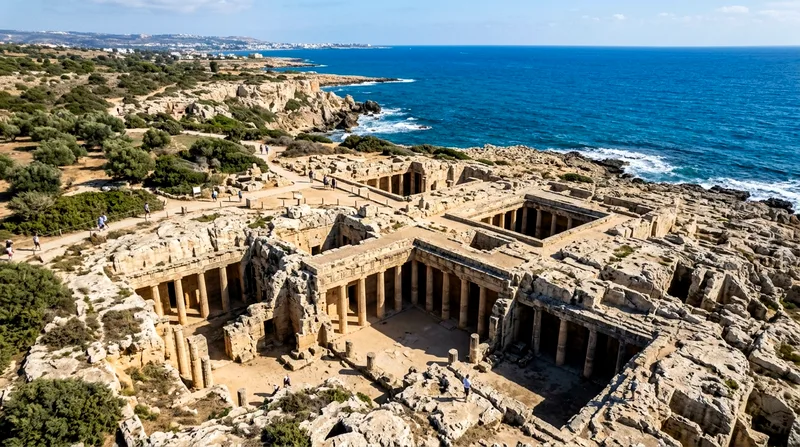
The Tombs of the Kings, another UNESCO-listed necropolis, sits about 2km north and pairs naturally with the park — many visitors do both in a single day using a short taxi ride or the local tourist train. The Paphos Mosaics Museum and the Byzantine Museum in the old town add context if you want depth beyond what's on-site. Compared to Malta's Hypogeum, which requires advance timed booking weeks ahead due to strict visitor caps, Paphos's sites are refreshingly easy to combine on short notice.
Frequently asked questions
How much do Paphos Archaeological Park tickets cost?
Standard adult entry runs in the low single-digit euros, with reduced pricing for students and seniors and free entry typically for young children. Prices are modest compared to similar UNESCO sites in Italy or Greece, but they do get reviewed periodically, so check the current fee at the gate or official booking page rather than relying on an old figure you saw online.
Can I visit without a guided tour?
Yes, and most visitors do. The park is well signposted with printed maps available at the entrance and detailed information panels at each major site. A self-guided visit works well for families and independent travelers; just know you'll get a surface-level understanding of the mosaics' mythology unless you rent an audio guide or read up beforehand.
What are the park opening hours?
Hours shift seasonally — roughly 8:30am to 7:30pm in summer and 8:30am to 5pm in winter, with last entry about an hour before closing. Hours can shift around public holidays, so confirm your exact travel dates against the current schedule before planning your day.
Is there parking at Paphos Archaeological Park?
Yes, there's a public parking area near the harbour-side entrance, a short walk from the ticket office. It fills up on busy mornings in peak season (June to September), so arriving early solves both the crowd problem and the parking problem at once.
What should I bring when visiting the ruins?
Sun protection is non-negotiable — a hat, sunscreen, and your own water bottle, since shade is limited outside the mosaic buildings and on-site refreshment options are minimal. Wear closed, grippy shoes for the raised walkways inside the villas, and bring a camera with a wide lens if you want to capture the full mosaic floors rather than cropped sections.