Plan your Cape Greco national park visit: free park access, kayak tours to sea caves, entry fees, best times to go, and nearby Cyprus attractions.
What is Cape Greco and why visit
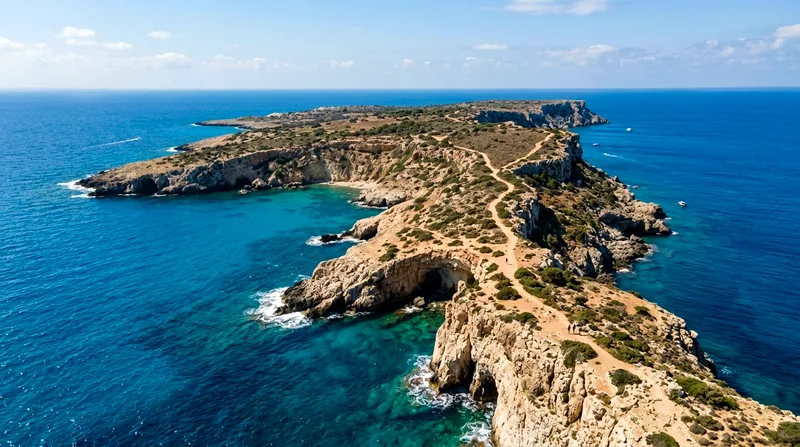
Cape Greco National Park sits at the easternmost tip of Cyprus, in the Famagusta District, between the resort towns of Ayia Napa and Protaras. It's a headland of pale limestone cliffs, sea caves, and sinkholes carved by centuries of wave action, covered in low scrub and the occasional juniper tree that's survived the salt wind. The park covers roughly 14 square kilometers, and a network of marked trails runs along the clifftops and down toward the water.
What makes a Cape Greco national park visit worth planning around, rather than squeezing in as an afterthought, is the contrast with the rest of this coastline. Ayia Napa's beaches are sand and sunbeds; Cape Greco is rock, wind, and open sea. The cliffs drop 15 to 30 meters in places, and the water below shifts from pale turquoise in the shallows to a deep navy further out.
Geography and natural features
The headland's defining features are its sea caves — a series of arches, tunnels, and collapsed sinkholes carved into the limestone. The most photographed is a natural land bridge near the lighthouse, where a rock arch frames the water below. There's also a submerged cave system accessible mainly by kayak or small boat, where sunlight filters through narrow openings onto the water inside. The terrain is mostly flat or gently rolling, with a few steeper descents near the cave entrances — wear proper shoes, not sandals, since the limestone gets slippery when wet.
Why it's worth the trip
Compare Cape Greco to the Akamas Peninsula on the island's western end, and it's clear they serve different purposes. Akamas is bigger and wilder, with longer hiking and a more remote feel. Cape Greco is compact — you can walk most of the main trail network in two to three hours — and it's close enough to Ayia Napa's nightlife and Protaras's family beaches that you can do both in a day. If you're staying in either town, this is the easiest serious nature experience on this side of Cyprus, and it doesn't require a long drive or an early ferry like a day trip to somewhere like Crete's Samaria Gorge would.
Free access vs paid activities
Here's the detail that trips people up when researching a Cape Greco visit: the park itself costs nothing to enter, but the activities most people actually come for — kayaking to the sea caves, snorkeling, boat tours — are paid extras run by independent operators. There's no single ticket office or gate, because there's no single operator controlling the whole site. It's public land managed by the Cyprus Forestry Department, with parking areas, trailheads, and viewpoints open to anyone, any time of day, for free.
Walking the park is free and open-access, while reaching the sea caves properly means paying for a kayak or boat tour.
Cape Greco visit options compared: cost, time and what you get
| Option | Typical cost | Time needed | Best for |
|---|---|---|---|
| Self-guided clifftop walk | Free | 2–3 hours | Hikers, photographers, budget travelers |
| Short lighthouse/caves loop | Free | 45–60 minutes | Families, limited time, seniors |
| Guided kayak tour to sea caves | Approx. €25–€45 pp | 2–3 hours | Active travelers, couples, photographers |
| Small-boat coastal tour | Approx. €20–€40 pp | 1.5–2.5 hours | Seniors, less physical effort |
| Self-guided kayak/SUP rental | Approx. €15–€25 per hour | Flexible | Confident paddlers, solo travelers |
Typical figures based on general regional pricing patterns; always check current prices and conditions before booking.
Park entry and walking trails
There's no entry fee and no booking required to walk the park. Trails are marked with wooden signposts and color-coded routes — the main coastal path runs roughly 4 to 5 km one way along the cliffs, with shorter loops near the lighthouse and the sea caves for people who don't want the full distance. Bring your own water; there are no shops or refreshment stands along most of the trail, just a couple of seasonal kiosks near the main car parks.
Paid kayak and water tours
Getting into the sea caves themselves is where the paid side comes in. Local operators based in Ayia Napa harbor run kayak tours and small-boat excursions that take you into the caves and around the headland — something you simply can't do on foot, since most caves are only accessible from the water. Expect kayak tours to run a few hours, often combined with a snorkeling stop, and priced in the range of €25–€45 per person depending on group size and season — check current prices when booking, since operators adjust rates through the year. This is one spot where paying for a guided water tour genuinely adds something a free visit can't replicate.
How to visit independently
Most visitors do Cape Greco on their own, on foot or by rental car, and it works well if you're comfortable navigating without guided commentary. There's no visitor center with staff, so you're relying on trail signage and whatever you've researched beforehand — which is fine, since the layout is straightforward, but it does mean you won't get the local stories a guide might offer.
Getting there by car or bus
From Ayia Napa, it's about a 10 to 15 minute drive to the main Cape Greco car parks; from Protaras, closer to 15 to 20 minutes. A rental car is genuinely the easiest way to do this — public bus coverage out to the headland itself is limited, and most visitors who rely on buses end up walking the last stretch from town, which adds real time and isn't shaded. Taxis are a reasonable fallback if you're not driving, though you'll want to arrange a pickup time rather than hoping to flag one down out at the cape.
Parking and facilities
There are several free parking areas scattered around the park — near the lighthouse, near the main sea caves, and at a few trailheads. They're unpaved and can fill up on summer weekends by mid-morning, so arriving before 10am gives you the best shot at a spot close to the main viewpoints. Facilities are basic: a few public restrooms near the busier car parks, limited shade, and no permanent food vendors beyond the odd seasonal van. Don't expect the infrastructure you'd find at a paid attraction — this is closer to a rugged coastal reserve than a managed tourist site.
Guided tours and sea cave access
If the sea caves are the main reason for your Cape Greco national park visit, a guided tour is the realistic way to see them properly. Kayaking is the most popular method, since kayaks can get into narrow cave mouths that boats can't, but there are also small-boat tours that cover more ground with less physical effort — a better call for older travelers or anyone not confident paddling.
Booking kayak tours
Kayak tours typically launch from Ayia Napa harbor or a beach closer to the cape itself, and most operators offer both guided group tours and self-guided kayak rentals for stronger paddlers. Book a day or two ahead in peak season (June through September), since good-weather slots fill up and operators sometimes cancel if the sea is too rough. Compare current kayak tours and prices before you book — conditions and availability shift through the season, and it's worth checking reviews for how recently a listing's information was updated.
What to expect on water tours
A typical tour runs 2 to 3 hours, paddling along the coastline into several cave systems, with stops for swimming or snorkeling in open water. Guides point out the arch formations and the deeper sinkholes, and most tours include basic safety gear — life jackets are standard, wetsuits usually aren't needed given the water temperature in summer. One honest caution: these tours get canceled or rerouted in windy conditions, which isn't rare on an exposed headland like this, so build a buffer day into your itinerary if the caves are a priority rather than a nice-to-have.
Best time to visit
Timing a Cape Greco visit well matters more than at a lot of Cyprus attractions, because so much of the experience depends on sea conditions and sun angle rather than just opening hours — there aren't any, since it's open-access parkland round the clock, though walking the cliffs after dark isn't something I'd recommend given the drop-offs and lack of lighting.
Seasonal weather and crowds
May, June, and September offer the best balance: warm enough to swim, calmer seas than midsummer afternoons, and noticeably thinner crowds than July and August. Midsummer brings reliable sunshine but also the biggest crowds and the fullest car parks, particularly on weekends when Cypriot families join the tourist traffic. Winter is quiet and often strikingly clear for photography, but kayak tours run less frequently or not at all when the sea turns rough, which happens often between November and February.
Activity availability
Mornings are consistently calmer than afternoons here — the wind tends to pick up after midday, which is exactly when sea cave tours become choppier and less enjoyable. If kayaking is your priority, aim for a tour departing before 11am. Snorkeling visibility is best in the shoulder months when the water is clear but not yet churned up by peak-season boat traffic.
Nearby attractions and add-ons
Cape Greco's location between two different resort towns makes it easy to build into a wider day out rather than treating it as a standalone trip.
Protaras and Ayia Napa
Protaras offers calmer, family-friendly beaches like Fig Tree Bay, a short drive north of the cape — a sensible pairing if you've got children who want sand and shallow water after a morning of clifftop walking. Ayia Napa, to the south, brings the harbor, the kayak operators, and the nightlife; it's also where most organized Cape Greco tours and water activities are based. Compared with a day trip out to somewhere like Rhodes's Lindos or a Santorini caldera excursion, Cape Greco is lower-key and far less crowded with tour buses, which some travelers will prefer and others will find underwhelming if they're after a bigger, more dramatic spectacle.
Coastal villages and dining
There isn't much dining directly at Cape Greco beyond seasonal snack vans, so plan to eat in Ayia Napa or Protaras before or after. Both towns have a strong run of fish tavernas along the harbor and seafront — reasonably priced by Mediterranean resort standards — and this is a good spot to try a meze spread if you haven't already. Avoid the handful of overpriced beachfront spots directly facing the main tourist strip in Ayia Napa; walk two or three streets back and prices drop noticeably without any real loss in quality.
Frequently asked questions
Is entry to Cape Greco National Park free?
Yes. There's no ticket, gate, or entry fee for the park itself — it's public forestry land with open access to the trails, viewpoints, and car parks at any time. The only costs come from optional paid activities like kayak rentals, guided water tours, or scuba diving excursions run by operators based in Ayia Napa.
Can you visit the sea caves without a tour?
You can see some cave entrances and the rock arch from clifftop viewpoints and short trails for free, but you can't actually enter most of the caves on foot. Getting inside them requires a kayak, SUP, or small boat, since the openings sit at water level and are only reachable from the sea.
What is the best time to kayak at Cape Greco?
Morning departures, ideally before 11am, give you the calmest water before afternoon wind picks up. May, June, and September tend to offer the best combination of warm water and manageable crowds; July and August are busier and sometimes choppier in the afternoons.
How long does a typical visit take?
Walking the main trails and viewpoints takes about 2 to 3 hours at a relaxed pace. Add a kayak or boat tour and you're looking at a half-day visit, roughly 4 to 5 hours total once you include parking, walking to the launch point, and the tour itself.
Are there facilities like restrooms and parking?
There are a handful of free, unpaved car parks near the main viewpoints and a few public restrooms close to the busiest areas, but facilities are minimal overall. Don't expect shops, restaurants, or shade structures along the trails — bring water and sun protection, especially between June and September.