Book Tombs of the Kings tickets in Paphos. Compare entry fees, audio guides, and guided tour options. Opening hours and visitor information.
What Are the Tombs of the Kings?
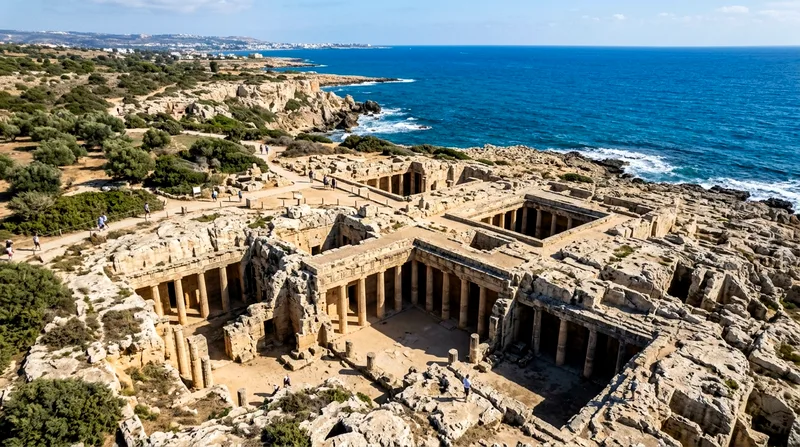
Despite the name, no kings were ever buried here. The Tombs of the Kings is a sprawling underground necropolis cut into solid limestone on the northwestern edge of Paphos, Cyprus, used by the city's aristocracy and high officials from around the 4th century BC through the Roman era. Early archaeologists assumed only royalty could afford tombs this elaborate, and the name stuck.
The site sits within the Paphos District, a short drive or taxi ride from the Kato Paphos Archaeological Park and the harbor. It forms part of the wider Paphos UNESCO World Heritage Site designation, recognized for its concentration of Hellenistic and Roman-era remains. If you've already bought a ticket for the mosaics at Kato Paphos, it's worth knowing these are separate sites with separate entry fees — there's no combined pass covering both as of writing, so budget time and money for each individually.
Historical significance and UNESCO status
The tombs were carved by cutting straight down into rock and hollowing out chambers below ground level, a technique borrowed from Alexandria rather than developed locally — a sign of how closely Hellenistic Cyprus looked to Egypt for cultural cues. Some tombs feature Doric columns and peristyle courtyards that mimic the houses of the living, which is unusual for burial architecture in this period. UNESCO listed the Paphos archaeological zone in 1980, citing the exceptional density and quality of Hellenistic and Roman remains across the district, the Tombs of the Kings among them.
What to expect on site
Expect an open-air, sun-exposed walking site spread across roughly 7.5 hectares, with eight main tomb complexes connected by gravel and dirt paths. There's minimal shade — bring a hat. Many of the tomb interiors are accessible via stone steps, and you can walk into several of the larger underground chambers, though lighting is natural, so overcast days or late afternoon make photography trickier inside the deeper rooms. Signage at each cluster gives basic context in English and Greek, but it's sparse compared to, say, the mosaic panels at Kato Paphos. Most visitors spend 60–90 minutes here; history enthusiasts linger closer to two hours.
How to Visit: Independent vs. Guided Tours
Most people visit the Tombs of the Kings independently, and I think that's the right call for the majority of travelers. The site is compact enough to navigate without a guide, entry is cheap, and the main draw — walking among the carved chambers with the Mediterranean Sea as a backdrop — doesn't require narration to appreciate. That said, a guided option makes sense if you want the historical context delivered on the spot rather than read off a plaque, or if you're combining the visit with other Paphos sites in a single organized day.
Independent visits cost less and move faster, while guided tours suit travelers who want context and logistics handled for them.
Tombs of the Kings tickets: independent visit vs guided tour compared
| Visit type | Typical cost | Typical duration | Best for | Flexibility |
|---|---|---|---|---|
| Self-guided (walk-in ticket) | Low (site entry fee only) | 60-90 min | Solo travelers, couples, budget trips | High |
| Self-guided with audio guide | Low-moderate (entry plus rental) | 75-100 min | Independent travelers wanting context | High |
| Half-day guided tour (multi-site) | Moderate-high | 3-4 hours | Families, first-time visitors, time-pressed travelers | Low |
| Full-day Paphos tour package | High | 6-8 hours | World travelers covering multiple sites in one trip | Low |
Typical figures based on standard visit patterns; always check current prices and tour inclusions when booking.
Self-guided visits with audio guide
An audio guide is sometimes available for rent at the ticket kiosk, though availability can be inconsistent — don't count on it being there every day, and check at the entrance rather than assuming. If it's not offered on-site, downloading a third-party audio tour app beforehand, or simply reading up on the Hellenistic burial customs before you go, covers the gap. Self-guided visits give you control over pacing, which matters here because the heat and lack of shade mean you'll want to move through quickly in midday sun and slow down in the cooler hours. Paths are uneven in places, so proper shoes matter more than an audio commentary.
Organized tour options
Paphos-based tour operators typically bundle the Tombs of the Kings into half-day or full-day itineraries alongside Kato Paphos Archaeological Park, the Paphos Mosaics, and sometimes Aphrodite's Rock further along the coast. These tours usually include a licensed guide, transport between sites, and skip-the-line entry, which is useful in peak season when coach groups bunch up at the ticket gate. The trade-off is pace — you'll move on a schedule, not your own. If you're a solo traveler or a couple comfortable navigating on foot, independent visits plus a taxi or rental car cost less and move faster. Families with young children often prefer the structure of a guided day, since someone else handles the logistics. Compare current guided tour options and prices before you book, since inclusions and group sizes vary by operator.
Tickets and Entry Fees
Tombs of the Kings tickets are sold at the on-site gate and, through various booking platforms, online in advance. Buying ahead isn't essential outside of peak summer weeks — this isn't a site that sells out — but it does let you skip a short queue and lock in your visit time if you're coordinating with a tour or rental car schedule.
Standard entry rates
The standard adult entry fee for the Tombs of the Kings has historically sat in the modest €2.50 range, making it one of the cheaper archaeological sites in Cyprus — far less than the Kato Paphos Archaeological Park ticket, which covers a larger area with mosaics, a theatre, and a medieval fort. Always check the current price when booking, since site fees are adjusted periodically by the Department of Antiquities. Cash and card are both generally accepted at the gate, though having small change speeds things up if a card machine is down, which happens occasionally at smaller Cypriot heritage sites.
Concessions and group bookings
Children under a certain age (typically around 12) usually enter free, and students with valid ID often get reduced rates — bring a physical student card, since digital versions aren't always accepted by on-site staff. Cyprus residents and EU students sometimes qualify for further discounts, so carry ID that proves residency if that applies to you. Group bookings of ten or more, common with school trips and coach tours, are usually arranged through the tour operator rather than negotiated at the gate. If you're part of a cruise excursion stopping in Paphos, check whether your shore excursion already bundles entry — paying twice is an easy mistake to make.
Best Time to Visit
Timing matters more here than at almost any other Paphos attraction, because there's no built shelter and the terrain reflects heat back at you. I'd avoid visiting between noon and 3pm from May through September entirely — it's not just uncomfortable, it's genuinely risky for anyone prone to heat exhaustion, including older travelers and young kids.
Seasonal considerations
Tombs of the Kings opening hours shift with the season, generally running longer in summer (roughly 8am to 7:30pm) and shorter in winter (around 8:30am to 5pm), with last entry typically 30 minutes before closing. Spring (April–May) and autumn (October–early November) offer the best balance of daylight, mild temperatures, and lighter tourist numbers — this is when I'd point most travelers, including senior visitors and anyone without a high heat tolerance. Winter visits are perfectly viable too; Cyprus rarely gets cold, and a December or January morning here is genuinely pleasant with soft light for photos.
Crowd levels and weather
Early morning, right at opening, is the quietest window and also the coolest — you'll often have entire tomb clusters to yourself before 9:30am. Cruise ship days bring coach groups through mid-morning to early afternoon, so if a ship is in port at Limassol or Paphos itself, expect more foot traffic. Sunset visits are popular for photography, with the limestone catching warm light and sea views opening up toward the horizon, but the site typically closes before full sunset in summer, so check the exact closing time rather than assuming you can stay until dusk.
Nearby Attractions and Add-Ons
The Tombs of the Kings sits close enough to other Paphos sites that it's worth planning a half-day rather than a single stop. This is one of the more efficient corners of Cyprus for sightseeing — you can cover 2,000 years of history and a harbor lunch without much driving.
Paphos archaeological sites
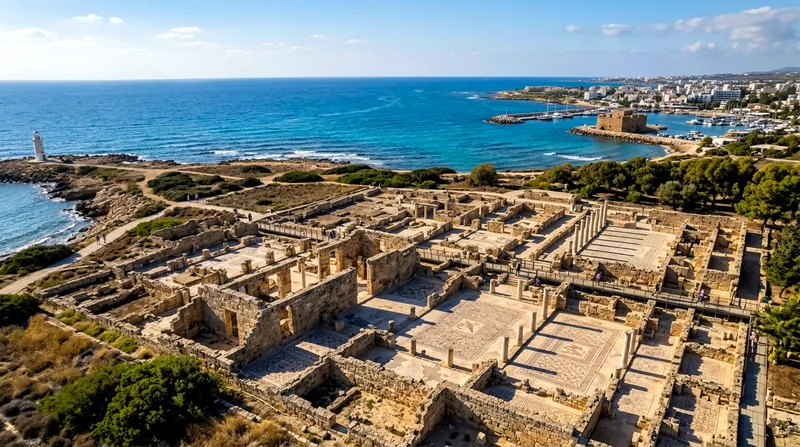
Kato Paphos Archaeological Park, home to the famous Roman-era mosaics depicting scenes from Greek mythology, sits about ten minutes away by car or a longer walk along the coast road. It's a larger, denser site and deserves two to three hours on its own — don't try to rush both sites in one morning unless you're comfortable moving quickly. The Paphos Odeon and the Tomb of Saint Lambros are within the same park complex, so a single ticket there covers several monuments at once, unlike the standalone Tombs of the Kings fee.
Coastal and cultural experiences
Paphos Harbor, with its medieval fort and row of fish tavernas, makes a natural follow-up stop — plan on 15 minutes' drive or a flat, walkable 25 minutes along the seafront path. Anglers and boaters based in Paphos often combine a morning at the tombs with an afternoon fishing charter or coastal boat trip departing from the harbor. If you're staying longer in the region, Aphrodite's Rock (Petra tou Romiou) is about 25 minutes east by car and pairs well with a coastal drive, while the Avakas Gorge near the Akamas Peninsula suits travelers wanting a hiking contrast to all the ruins. Compare current boat tours and combined sightseeing options before you book, since availability and routes change seasonally.
Frequently asked questions
How much do Tombs of the Kings tickets cost?
Standard adult entry has historically been around €2.50, with reduced rates for students and free entry for young children, though fees are set by the Department of Antiquities and can change. Check the current price when you book or at the gate, and bring small cash as a backup in case the card machine is unavailable.
Can I visit with an audio guide or do I need a tour?
Neither is required. The site has basic signage in English and Greek, and most visitors manage fine without narration. An audio guide may be available for rent at the kiosk, though availability isn't guaranteed day to day — a guided tour is only worth it if you specifically want a live historian explaining the Hellenistic burial customs as you walk.
What are the opening hours?
Tombs of the Kings opening hours generally run from around 8am to 7:30pm in summer and 8:30am to 5pm in winter, with last admission roughly 30 minutes before closing. Hours shift with daylight saving changes, so confirm the current schedule before you drive out, especially in shoulder-season months.
Is the site accessible for visitors with mobility issues?
Partially. The upper paths connecting the tomb clusters are relatively flat gravel and manageable with assistance, but descending into the underground chambers requires navigating stone steps with no ramps or lifts. Wheelchair users and those with limited mobility can see the above-ground courtyards and colonnades but won't access the deeper tomb interiors.
What other attractions are near the Tombs of the Kings?
Kato Paphos Archaeological Park with its Roman mosaics is about ten minutes away, and Paphos Harbor with its medieval fort and tavernas is a similar distance. Aphrodite's Rock sits roughly 25 minutes east by car, making it realistic to combine two or three of these sites into a single day without excessive driving.