Planning a Kykkos Monastery visit? Here's entry fee info, tour options from Limassol and Nicosia, dress code, opening hours and timing tips.
What Is Kykkos Monastery and Why Visit
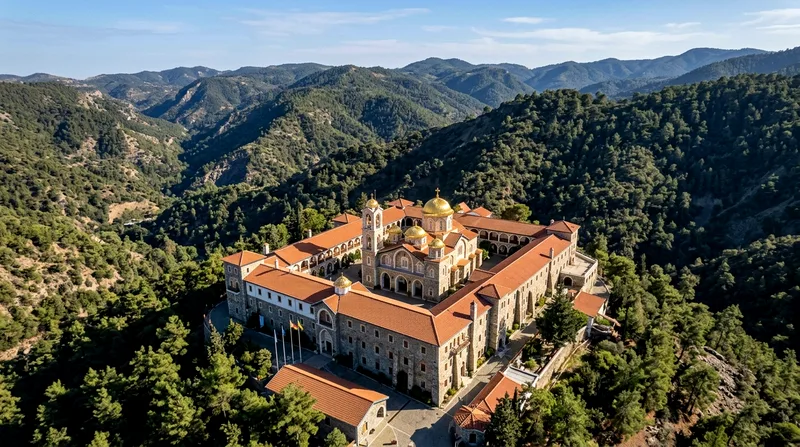
Kykkos Monastery sits at around 1,140 metres in the Troodos Mountains, roughly an hour and a half from Nicosia and about two hours from Limassol or Paphos by car. It's the wealthiest and most politically significant monastery in Cyprus, and for many Greek Cypriots it functions less like a tourist attraction and more like a national shrine. A Kykkos Monastery visit isn't just about architecture — it's about understanding how deeply this one building has shaped Cypriot identity over nine centuries.
The monastery was founded around 1100 under Byzantine emperor Alexios I Komnenos, and its wealth and influence grew through land grants and pilgrim donations across the Ottoman and British colonial periods. Archbishop Makarios III, the first president of independent Cyprus, served as a novice monk here before his political career — his tomb sits a short drive away at Throni, on a ridge with views over the Marathasa Valley that are arguably better than anything inside the monastery walls.
If you're expecting an austere, ancient stone building, recalibrate. Fire has destroyed much of the original structure more than once, most recently in 1813, so what you see today is largely 19th and 20th century reconstruction, heavy with gold leaf and fresh frescoes rather than weathered antiquity. That disappoints some visitors who've come from Meteora or Mount Athos expecting something rawer — it's a fair criticism, and worth knowing before you go.
History and religious significance
The monastery's most sacred possession is an icon of the Virgin Mary, attributed by tradition to St. Luke, kept wrapped in silver and never fully uncovered — supposedly to protect viewers from its power, though skeptics will note this also protects a very old, fragile painting. The Orthodox Church of Cyprus treats Kykkos as one of its most important pilgrimage sites, and it still functions as a working monastery with resident monks, not a museum piece. That operational reality shapes visiting hours, dress rules, and the general hush expected from guests, even on the busiest tour-bus afternoons.
What to see inside the monastery
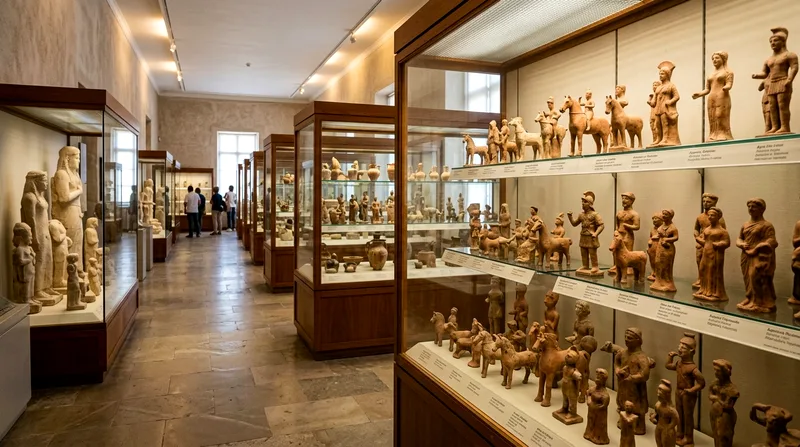
Inside, the main church holds an elaborate iconostasis covered in gold leaf, surrounded by wall-to-wall mosaics depicting biblical scenes in a style closer to modern Byzantine revival than ancient fresco work. A small museum on site — included in some ticket arrangements, separate in others — displays vestments, manuscripts, and ecclesiastical silverware going back centuries; it's genuinely one of the better monastery museums in Cyprus and worth the extra 30 minutes. The courtyards themselves, tiled and arcaded, are where most people linger, partly for the architecture and partly because the mountain air at this elevation is a relief after Limassol or Paphos heat.
How to Get There: Independent vs Guided Tours
There's no realistic way to reach Kykkos by regular public bus on a tight schedule — this is the main fork in the road for planning a visit. You're choosing between self-drive and a guided tour, and the right answer depends more on your comfort with mountain driving than on budget.
Self-driving from Nicosia is the shortest and easiest approach, while Limassol and Paphos trips both run close to two hours each way.
Kykkos Monastery visit: driving time and approach by departure city
| Departure city | Drive time (approx.) | Route character | Best for |
|---|---|---|---|
| Nicosia | 1.5 hours | Mountain roads, moderate winding | Day-trippers short on time |
| Limassol | 2 hours | Via Platres, winding Troodos roads | Combining with Troodos villages |
| Paphos | 2 hours | Via Polis or Troodos interior | Combining with Marathasa Valley |
| Larnaca | 2–2.5 hours | Longer mountain stretch | Full-day guided tours only |
Drive times are approximate and depend on route choice, season and traffic; mountain roads are slower in winter weather.
Self-drive and public transport options
Driving is the most flexible option and, frankly, the one I'd recommend for most travelers. From Nicosia, it's about 90 minutes via the B9 and E912 through the Marathasa Valley; from Limassol, figure close to two hours via Platres and the Troodos road network; from Paphos, around two hours via Polis or the Troodos interior, depending on route. Roads are paved and well-signed but narrow and switchback-heavy in the final stretch — fine in a standard rental car, less fine if you're nervous about cliffside bends with no barrier. There's a limited but free car park near the entrance that fills by mid-morning in peak summer weekends; arriving before 10am avoids the scramble. A seasonal bus does run from Nicosia a few times a week, but schedules are sparse and not reliable enough to build a day trip around — check current timetables locally rather than relying on anything published in advance.
Guided tour benefits and availability
Guided day tours from Limassol, Paphos, and Nicosia are widely available and usually bundle Kykkos with the Troodos villages, Makarios's tomb at Throni, and sometimes a painted church or two. The appeal is obvious: no mountain driving, a guide explaining the iconography and history you'd otherwise miss, and often lunch included in a Troodos village like Kalopanayiotis. The downside is time — you'll typically get 60 to 90 minutes at the monastery itself on a full-day multi-stop itinerary, which feels rushed if you want to sit with the museum exhibits or walk down to Throni unhurried. Tour pricing varies by operator and season; compare current prices and itineraries before you book, and check whether entry and museum fees are included or paid separately on arrival.
Entry Fees and Practical Information
Kykkos Monastery itself has free entry to the main courtyards and church — this surprises people who assume a site this famous charges admission. The museum is a separate, modestly priced ticket, generally in the few-euro range, and donations are welcomed throughout. That makes it an easy add-on even if you're not committing to a full guided tour.
Admission costs and what's included
Expect no charge for walking through the main gates, courtyards, and church interior. The separate museum ticket covers manuscripts, vestments, and historical artifacts, and is worth the extra time if you have it — it's a better collection than most visitors expect from a mountain monastery. Parking is free. If you're on a guided tour, check whether the museum entry is bundled into the price or an optional extra once you arrive, since this varies by operator and isn't always made clear in advance.
Dress code and visitor rules
Shoulders and knees must be covered for both men and women — shorts, short skirts, and sleeveless tops aren't permitted inside the church, and the monastery keeps wraps at the entrance for visitors who show up underdressed. Photography is restricted or banned entirely inside the church itself, though courtyards are usually fine; signage makes the rules clear, and monks enforce them without much patience for arguing. Quiet is expected — this is an active place of worship, not a backdrop for a loud group photo, and treating it otherwise gets you politely but firmly corrected.
Best Time to Visit Kykkos
Elevation changes everything here. At over 1,100 metres, Kykkos runs noticeably cooler than the coast — a real advantage in July and August when Limassol and Paphos are pushing 35°C and the mountain air sits closer to the mid-20s.
Seasonal weather and crowds
Spring (April–May) and early autumn (late September–October) are the best windows: comfortable temperatures, wildflowers or turning leaves in the Troodos forests, and noticeably thinner crowds than peak summer. Winter brings genuine cold and occasional snow at this altitude — atmospheric if you're prepared for it, but some facilities run reduced hours and mountain roads can ice over, so check conditions before driving up between December and February. Summer weekends see the heaviest coach traffic, arriving in waves from around 10:30am through early afternoon; if you can only go in July or August, aim for a weekday and arrive by 9am.
Religious festivals and events
The monastery marks major Orthodox feast days with greater ceremony and far larger crowds of pilgrims, particularly around Easter and the Dormition of the Virgin in mid-August, one of the most significant dates on its calendar. These are fascinating times to visit if you want to see the site as a living religious institution rather than a photo stop, but expect packed courtyards, limited parking, and a more solemn, crowded atmosphere than a typical Tuesday morning. If quiet contemplation is the goal, avoid these dates; if cultural immersion is the goal, they're worth planning around.
Nearby Attractions and Add-Ons
Kykkos rarely works as a standalone destination given the drive involved, so most visitors build it into a wider Troodos day or overnight trip.
Troodos Mountain villages and hiking
Platres village, about 40 minutes southeast, makes a good base with tavernas, waterfall walks, and cooler summer temperatures that draw Cypriot families escaping the coast. The Marathasa Valley villages below Kykkos — Kalopanayiotis and Pedoulas among them — offer traditional stone architecture, local wine, and access to several of the UNESCO-listed painted churches scattered across the Troodos. Hikers can tackle sections of the E4 European long-distance path, which cuts through this region, or shorter nature trails around Platres; none of these require technical skill, just decent footwear and a few hours.
Other monasteries and cultural sites
Throni, the hilltop site holding Makarios III's tomb, is a five-minute drive from Kykkos and free to visit — don't skip it, the panorama alone justifies the detour. Further afield, Machairas Monastery near Nicosia and the painted churches of Troodos (Panagia tou Araka, Asinou) offer comparison points if you're building a broader religious-heritage itinerary. Compared with Crete's Arkadi Monastery or the monastic complexes on Rhodes, Kykkos is wealthier and more actively tied to national politics — it doesn't have Arkadi's grim historical weight, but it carries more institutional power within the country today.
Frequently asked questions
What is the entry fee for Kykkos Monastery?
Entry to the monastery's courtyards and main church is free. The separate on-site museum charges a modest admission fee, typically a few euros, and photography inside the church is restricted. Donations are welcomed but not required.
How long does it take to visit Kykkos Monastery?
Budget 60 to 90 minutes for the church and courtyards, plus another 30 minutes if you visit the museum. Add 20–30 minutes for the short drive to Throni to see Makarios III's tomb and the valley viewpoint, which most visitors combine with the main visit.
Can you visit Kykkos Monastery independently or do you need a tour?
You can visit entirely independently by rental car — roads are paved and signed, and parking is free, though limited on summer weekends. A guided tour suits travelers who'd rather not drive mountain switchbacks or want historical context included, but it usually means less time at the site itself.
What should you wear when visiting Kykkos Monastery?
Cover your shoulders and knees — no shorts, short skirts, or sleeveless tops inside the church. The monastery provides wraps at the entrance for visitors who arrive underdressed, but bringing your own light scarf or trousers saves time and queuing.
What is the best time of year to visit Kykkos Monastery?
April–May and late September–October offer the best balance of mild temperatures and lighter crowds. Avoid major Orthodox feast days like Easter and the mid-August Dormition of the Virgin unless you specifically want to experience the religious ceremony, since crowds and parking pressure spike sharply then.