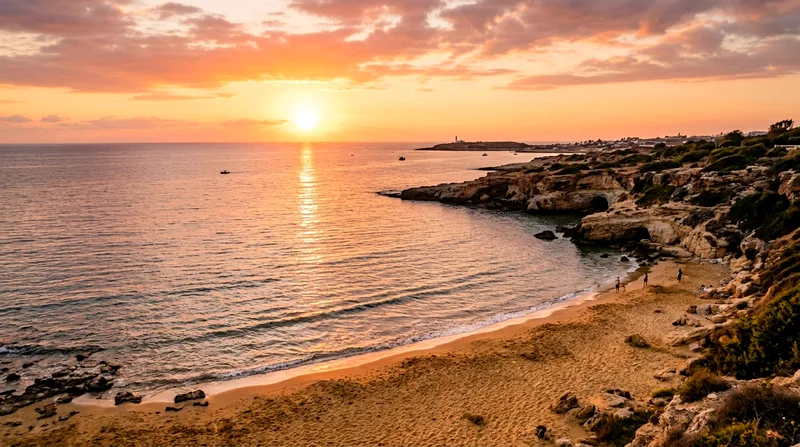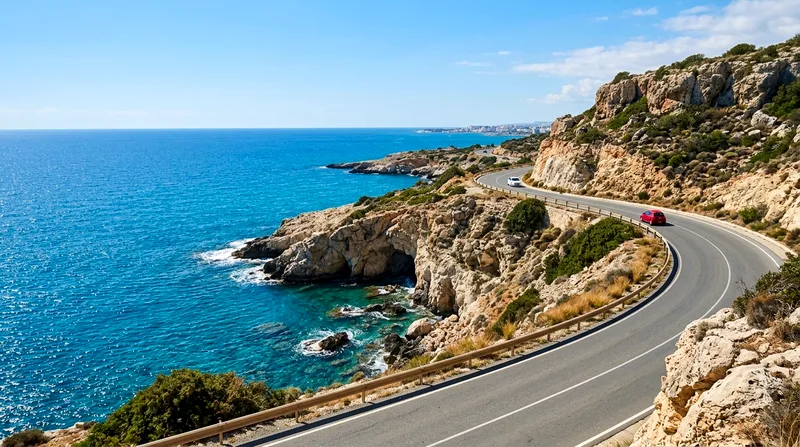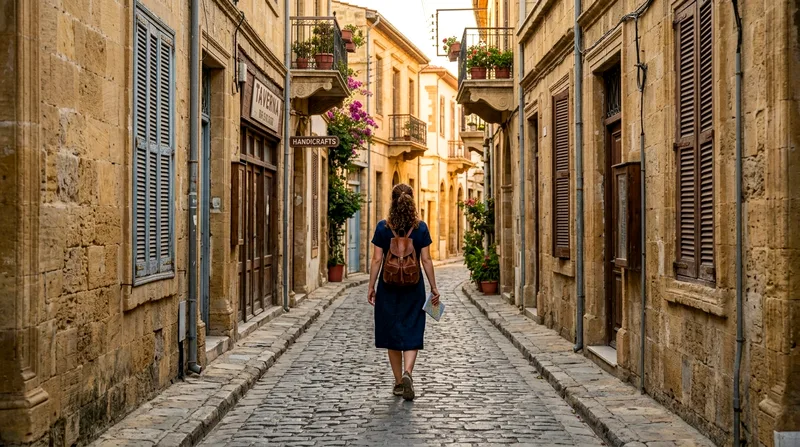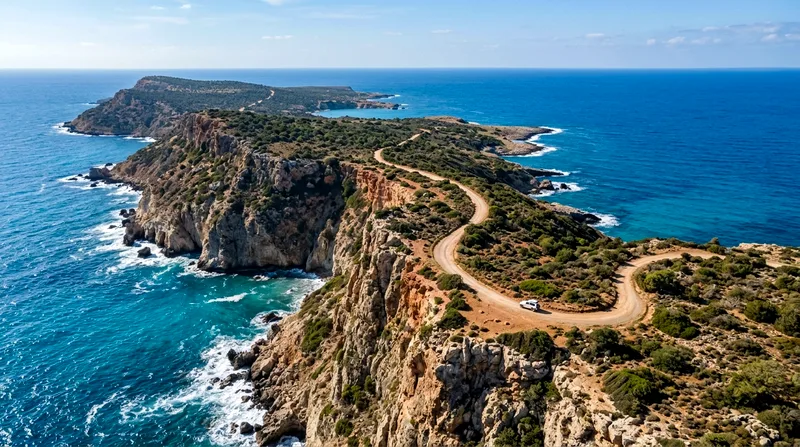
Plan your Cyprus road trip with this driving itinerary. Scenic routes, fuel stops, GPS segments, and bookable activities across the island.
Who This Itinerary Is For
This Cyprus road trip itinerary is built for travelers who want to drive themselves — not be driven. It covers roughly 300 km over four days, starting in Paphos, looping up into the Troodos Mountains, and finishing on the east coast around Larnaca and Ayia Napa. If you're renting a car at Paphos or Larnaca airport and want a route that avoids backtracking, this is it.
It suits couples and solo travelers who like flexibility, and families with kids old enough to tolerate winding mountain roads without complaint (younger kids and hairpin bends are a rough combination — more on that later). Senior travelers will find the daily driving distances manageable, rarely more than 90 minutes between stops, with plenty of reasons to pull over.
It's less suited to boaters and anglers staying fixed near a marina in Limassol or Larnaca, who'd get more value from day trips by sea than a four-day loop. Surfers and kitesurfers chasing specific wind conditions should treat this as a scenic add-on before or after their coastal base, not the main event — Cyprus's best kite spots cluster around Limassol and the south coast, and this route only brushes past them.
If you're coming from Crete, Rhodes, or Malta expecting similarly dense public transport, recalibrate: Cyprus's bus network is thin outside the cities, and a self-drive tour is genuinely the only practical way to see the Akamas Peninsula or the Troodos villages in one trip. Renting a car here costs noticeably less than in Mallorca or Sicily during peak season, which helps offset the lack of trains.
Day 1: Paphos to Akamas Peninsula
Start in Paphos and keep the first day short on driving, long on walking.
Each day of this Cyprus driving itinerary covers 40-90 km with one standout stop worth building the day around.
Cyprus road trip itinerary: daily driving distances and highlights compared
| Day | Route | Distance (km) | Drive time | Best for |
|---|---|---|---|---|
| Day 1 | Paphos to Akamas/Polis | approx. 40 | approx. 45 min | Coastal scenery, boat trip |
| Day 2 | Polis to Troodos | approx. 90 | approx. 2 hr | Mountain villages, monastery |
| Day 3 | Troodos to Larnaca | approx. 100 | approx. 2 hr 15 min | Wine villages, seafront walk |
| Day 4 | Larnaca to Ayia Napa | approx. 45 | approx. 40 min | Salt lake, beaches, Cape Greco |
Distances and times are approximate and exclude stops; mountain road times vary with traffic and weather.
Morning: Paphos harbour and old town
Begin at Paphos Harbour, where the Tombs of the Kings and the medieval fort sit within a 10-minute walk of each other. Budget two to three hours here — the archaeological park alone covers a large site and there's minimal shade, so go early if you're visiting between June and September. Park in the pay-and-display lots near the harbour (roughly €1-2/hour); street parking in the old town is tight and best avoided with a rental car you don't want scratched.
Afternoon & evening: Akamas coastal drive
From Paphos, drive north on the B7 toward Latchi — about 45 minutes, 40 km. This stretch is sealed road the whole way and easy driving. Beyond Latchi, the track into the Akamas Peninsula itself turns to compacted dirt and gravel; a standard sedan can usually manage the first few kilometers to the Baths of Aphrodite car park, but anything further toward Lara Bay genuinely needs a 4x4 — ruts and loose stone have stranded more than one rental saloon car here. Base yourself in Polis or Latchi for the night. A sunset boat tour along the Akamas coastline, departing from Latchi harbour, is worth booking a day ahead in high season — compare current boat tours and prices before you book, since availability tightens up quickly from May to September.
Day 2: Akamas to Troodos Mountains
This is the longest driving day, and the most rewarding.
Morning: Akamas to Troodos route
Leave Polis by 9am for the drive to the Troodos Mountains — about 90 km and 2 hours via the E903 and E904 through Polis, Kannaviou and Kykkos. The road climbs steadily and is paved throughout, though narrow and twisty past 600m elevation. Fill the tank before leaving Polis; stations thin out fast once you're in the hills. Stop at Kykkos Monastery, roughly 1 hour 15 minutes in — allow 45 minutes to look around, longer if the museum interests you.
Afternoon & evening: Mountain villages
Continue to Omodos or Kakopetria for the afternoon, both under an hour from Kykkos on mountain roads that demand lower gears and patience behind slower local traffic. These villages compare favorably to the hill towns of Sicily or inland Mallorca — stone architecture, small wineries, far fewer coach tours. Base yourself overnight in Troodos village or Platres; both sit near walking trails (the Caledonia Falls trail from Platres takes about 2 hours round trip) if you want to stretch your legs instead of driving further.
Day 3: Troodos to Larnaca Coast
Today trades pine forest for seafront promenade, with a wine detour in between.
Morning: Troodos descent and wine region
Descend via the E807 toward the Krasochoria wine villages — Omodos again, or Vouni and Pachna if you didn't stop there yesterday. This descent drops over 1,000m in about 40 km, so expect your ears to pop and your brakes to work. Budget 90 minutes including a stop at a village winery for tastings (most are free or a few euros per person). From there it's a straightforward 70-minute drive east to Larnaca via the A1 motorway, Cyprus's fastest and best-maintained road.
Afternoon & evening: Larnaca seafront
Arrive in Larnaca by early afternoon and walk the Finikoudes promenade — flat, shaded in parts, and lined with cafes if you want a late lunch. The Church of Saint Lazarus, a 10-minute walk inland, is worth 20 minutes even if churches aren't usually your thing; the crypt beneath it is one of the older Christian sites on the island. In the evening, a short boat trip from Larnaca marina out toward the Zenobia wreck site — one of the better-known dive locations in the Mediterranean — is bookable even if you're not diving yourself, as several operators run viewing trips. Check current schedules when booking, since they vary by season and sea conditions.
Day 4: Larnaca to Ayia Napa Loop
The final day is the shortest drive and the most beach-focused.
Morning: Salt lakes and Kiti
Start at Salt Lake Larnaca, a 10-minute drive from the marina. Between November and March it hosts migrating flamingos; outside those months it's dry and cracked, which is still worth seeing but don't expect birdlife in July. From there, drive 15 minutes to the village of Kiti to see the Church of Panagia Angeloktisti, known for its Byzantine mosaic — a quick 20-minute stop.
Afternoon & evening: Ayia Napa beaches
Continue east on the A3 motorway to Ayia Napa — about 40 minutes, 45 km. Nissi Beach and Makronissos Beach both deserve an afternoon; Nissi gets crowded by midday in summer, so if you want space, go to Makronissos instead or arrive at Nissi before 10am. Cape Greco, a 15-minute drive further, has coastal footpaths and sea caves worth the detour even for non-hikers. A sunset boat cruise along the Ayia Napa coastline, often including a swim stop near the sea caves, is a solid way to close the loop — book ahead in peak season, as the better-rated departures fill by early afternoon.
Getting Around: Driving Tips & Fuel
Cyprus drives on the left, a holdover from British rule, which catches out travelers used to continental Europe — including many Germans and French who make up a large share of visitors. Motorways (A1, A2, A3) are excellent and toll-free. Secondary roads (B-roads) are generally sealed but narrower, and anything with an E-number in the mountains can mean switchbacks and single-lane stretches shared with goats.
Road conditions and GPS navigation
Google Maps and Waze both work reliably in Cyprus and are what most rental agencies recommend over a dedicated GPS unit. Download offline maps before heading into the Troodos or Akamas, since signal drops in the deeper valleys. Road signs are in both Greek and English, which helps, but village names sometimes have two or three accepted transliterations — don't panic if the sign doesn't match your map exactly.
Fuel stations and rest stops
Fuel stations cluster around Paphos, Limassol, Larnaca and Nicosia, but get sparse in the Troodos interior — fill up in Polis or Platres before heading into the mountains, not after. Most stations take card payment 24/7 via self-service pumps even when the attached shop is closed. Rest areas on the A1 and A2 motorways have clean toilets and coffee kiosks roughly every 30-40 km; on mountain roads, your rest stops are really just village squares, which work fine.
Where to Base Yourself
Paphos works well as a start and end point if you're flying in and out of Paphos International Airport, and it has more resort infrastructure than Polis or Latchi. Troodos or Platres suit one night only — charming, but limited dining once the day-trippers leave. Larnaca is underrated as a base: it's close to the airport, has a walkable seafront, and costs noticeably less for accommodation than Ayia Napa or Limassol in July and August.
Ayia Napa is worth a night if you want beach clubs and nightlife, but it's not representative of the rest of Cyprus — treat it as a separate, louder chapter rather than the island's core character. If you'd rather skip the loop back and fly out from Larnaca instead of returning to Paphos, one-way rental drop-off fees typically run higher, so weigh that against the four hours you'd save not backtracking. Compared to basing in one spot in Corfu or Santorini and day-tripping by boat, this itinerary trades scenery-from-water for scenery-from-road — different experience, not a lesser one.
Optional Bookable Experiences
Beyond the sunset boat tours mentioned on Days 1, 3 and 4, a few other experiences slot naturally into this route if you have an extra day or want to swap out a driving leg. A guided jeep safari into the deeper, rougher sections of the Akamas Peninsula saves your rental car's suspension and gets you to viewpoints a sedan simply can't reach. In the Troodos, a half-day guided wine tour covering three or four Krasochoria villages is worth it if you'd rather not be the designated driver after tastings.
Near Larnaca, a scuba introduction dive (no certification required for a single supervised dive) is bookable through most marina-side operators, typically running two to three hours including equipment and a briefing. If you extend east past Ayia Napa, Cape Greco day-trip boat tours covering the sea caves and Blue Lagoon are a reasonable alternative to driving the coastal footpath in midsummer heat. Whatever you choose, check current prices and availability before you book — these shift by season far more than hotel rates do, especially anything involving a boat.
Frequently asked questions
How long does a Cyprus road trip take?
Four days covers the route in this itinerary comfortably — Paphos, Akamas, Troodos, Larnaca and Ayia Napa — with time for stops rather than just driving. Five or six days lets you add a Nicosia detour or a second night in the mountains. Trying to do it in two or three days means cutting either the Akamas or the Troodos leg, which defeats the point of a scenic drive.
What is the best time to drive in Cyprus?
April, May, September and October offer the most comfortable driving temperatures and clearer mountain roads without summer haze. July and August bring 35°C+ heat that makes midday stops at places like Kykkos Monastery or Nissi Beach uncomfortable; driving with air conditioning is fine, but walking stops need to shift to morning or early evening. Winter (December-February) can bring snow to the higher Troodos villages, occasionally closing the highest passes briefly.
Do I need an international driving permit in Cyprus?
EU and UK licence holders don't need an International Driving Permit for a standard car rental. Travelers from the US, Canada, Australia and most other non-EU countries should bring one alongside their home licence, since some rental counters ask for it even if it isn't always strictly enforced on the road. Check your specific rental company's requirement when booking rather than assuming.
Are Cyprus roads safe for self-driving?
Motorways and main B-roads are well maintained and genuinely easy to drive, comparable to or better than equivalent roads in Sicily or inland Crete. The main risks are mountain hairpins in the Troodos (slow down, use lower gears) and some aggressive overtaking from local drivers on single-lane roads — don't match that behavior, just let them pass.
What fuel type should I use for a rental car?
Most Cyprus rental cars run on unleaded petrol (95 octane is standard); diesel rentals exist but are less common and usually need requesting specifically. Always confirm fuel type at pickup — it's printed on the fuel cap and rental agreement — since filling a petrol rental with diesel is a common and costly mistake at self-service pumps.