Plan your 7 days in Cyprus itinerary with this self-drive route: daily activities, overnight bases, drive times, and bookable experiences.
Who This Itinerary Is For
This 7 days in Cyprus itinerary is built for travelers who want a rental car and a willingness to drive 60–90 minutes most days. It suits couples, families with kids over six or seven (long car rides with toddlers get old fast), solo travelers comfortable navigating on their own, and senior travelers who want a slower pace with fewer hotel changes. If you're a surfer or kitesurfer, this route touches the right coasts but you'll want to adjust days around wind — Cyprus kite spots cluster around Limassol and the south coast, with more consistent wind in summer.
It's less ideal for anyone without a car. Public buses connect the main towns but villages in the Troodos and most of the Akamas Peninsula are impractical without your own wheels, and taxis between towns get expensive quickly — expect €60–80 for a Larnaca-to-Paphos transfer versus a rental car costing €25–40 a day in low season.
I'd also say this plan is not for people who want to "do" every archaeological site on the island. Cyprus has an enormous amount of Roman, Byzantine, and medieval history, and trying to see it all in a week turns a holiday into a checklist. Pick highlights — Paphos mosaics, Kourion, maybe Choirokoitia — and let the rest go. Compare that against Crete or Sicily, where a week forces similarly hard choices; Cyprus is smaller, so the trade-offs are more about pace than geography.
Day 1: Arrival and Larnaca
Most international flights land at Larnaca International Airport, which makes it the natural start for a week in Cyprus. Pick up your rental car at the airport — book ahead in summer, as July and August rates spike and smaller agencies sell out of manual cars first.
Morning and afternoon
If you land before noon, drop bags at your hotel and walk the Finikoudes promenade, Larnaca's palm-lined seafront. The Church of Saint Lazarus, a 9th-century Byzantine structure with a carved wooden iconostasis, is a 10-minute walk inland and worth 30 minutes. Larnaca Fort, a small Ottoman-era fortress at the end of the promenade, costs around €2.50 to enter and gives decent harbor views. If you have energy left, drive 15 minutes to the Hala Sultan Tekke mosque on the Salt Lake — in winter the lake sometimes hosts migrating flamingos.
Evening
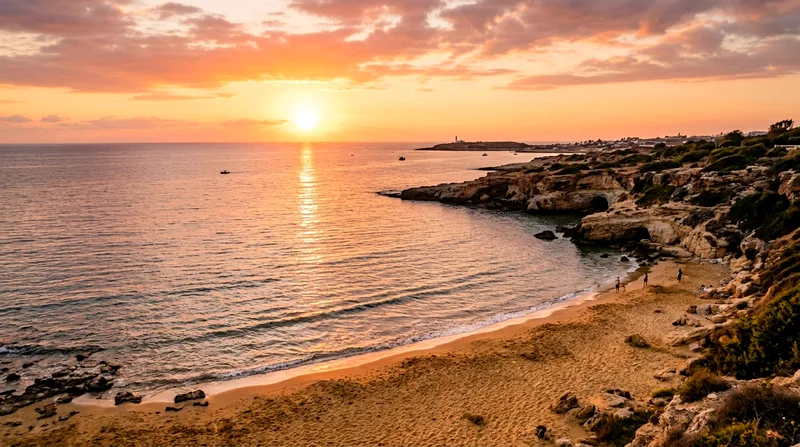
Eat dinner at one of the fish tavernas along Piale Pasha street, away from the touristier promenade strip. A sunset boat trip along the Larnaca coast is worth booking ahead for this evening or the next — it's a gentle way to shake off travel fatigue without committing to a full day. Check current prices and departure times when booking, since schedules shift seasonally.
Day 2: Larnaca to Limassol
The drive from Larnaca to Limassol takes about 50 minutes via the A1 motorway — one of the easiest legs of the whole week.
Morning and afternoon
Leave Larnaca by 9am and detour to Choirokoitia, a UNESCO-listed Neolithic settlement about 30 minutes off the motorway. It's one of the oldest organized settlements in the Mediterranean, dating back roughly 9,000 years, and entry is around €2.50. From there it's another 30 minutes into Limassol. Check into your hotel, then walk the Old Town around the medieval castle — modest in scale compared to Rhodes' Old Town walls, but worth an hour for the castle museum and the surrounding lanes.
Evening
Limassol's Marina area has the best concentration of restaurants, many with outdoor seating facing the yachts. If it's a Friday or Saturday in summer, check whether there's an event at the ancient Kourion amphitheatre nearby — summer festivals sometimes stage performances there, and seeing a show in a 2nd-century BC theatre is memorable even if you don't follow the language.
Day 3: Limassol and Wine Country
This is your day to go inland. The Cyprus wine regions sit in the foothills north of Limassol, centered on villages like Omodos and Vouni Panayias.
Morning and afternoon
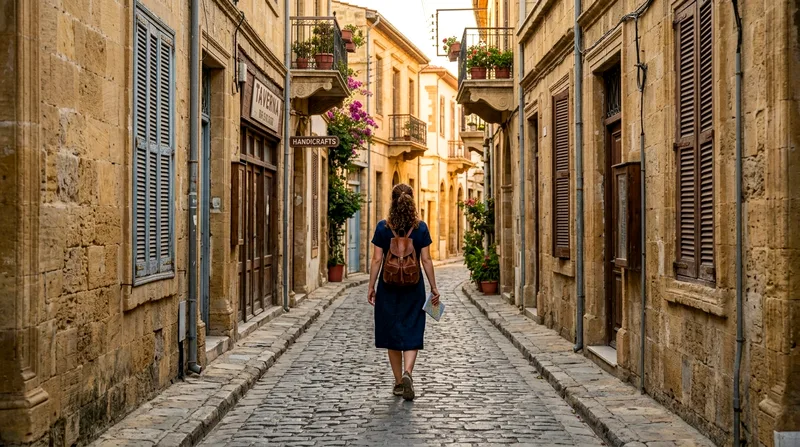
Drive 40 minutes to Omodos, a stone village built around a 19th-century monastery, and walk its cobbled square lined with lace shops and small wineries. From there, the Vouni Panayias–Ambelitis wine route winds through several small producers — most offer tastings for €5–10, often waivable with a purchase. Commandaria, Cyprus's sweet dessert wine, is made from grapes grown specifically in this region and is worth tasting even if you're not usually a dessert wine drinker. Budget 3–4 hours for wineries plus driving; roads here are narrow and slow, not the place to rush.
Evening
Head back to Limassol for the night, or if you prefer a quieter evening, stay in a village guesthouse near Omodos — rooms run €60–90 and mean you skip the evening drive. A wine-tasting tour booked in advance (rather than self-driving between cellars) solves the obvious problem of driving on mountain roads after a few pours.
Day 4: Paphos Exploration
Limassol to Paphos is about an hour on the A6 motorway. This is where the itinerary shifts from Roman and Byzantine sites to archaeology on a larger scale.
Morning and afternoon
The Paphos Archaeological Park holds some of the best-preserved Roman mosaics in the eastern Mediterranean, inside the Houses of Dionysos, Theseus, and Aion. Entry costs around €4.50 and you need at least two hours to see it without rushing — the site is large and mostly uncovered, so avoid midday in July or August unless you enjoy walking on exposed stone in 35°C heat. Afterward, the Tombs of the Kings, a rock-cut necropolis near the coast, is a 10-minute drive and another hour of walking (€2.50 entry).
Evening
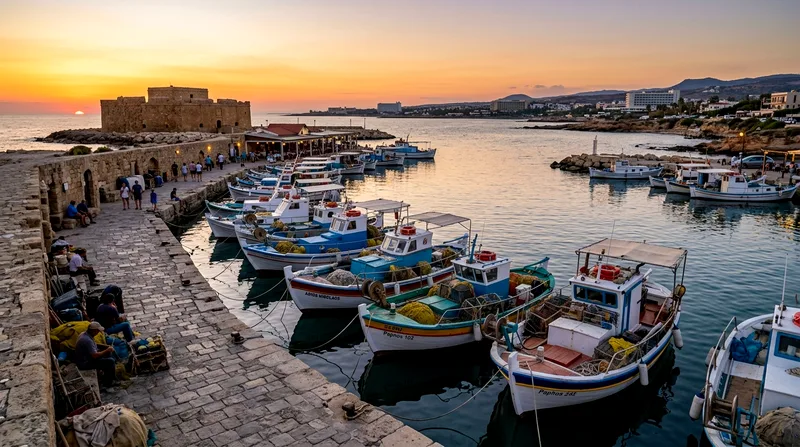
Paphos harbor has a dense row of restaurants with mixed quality — pick one with a view of the medieval fort rather than the first menu board someone hands you. The fort itself, lit at night, is free to view from outside.
Day 5: Akamas Peninsula Adventure
The Akamas Peninsula is Cyprus's least developed corner — no major resorts, limited paved roads, and some genuinely rough tracks.
Morning and afternoon
Drive 45 minutes north from Paphos to Lakki village, then continue toward the Blue Lagoon. The last stretch of road is unpaved and rutted — a standard rental car can usually manage it slowly, but a 4x4 is genuinely useful here and some rental agreements exclude damage on unpaved roads, so check the fine print before you go. The lagoon itself has clear, shallow water over white rock, good for swimming and reasonably sheltered. Pack lunch; options nearby are limited to one or two seasonal snack vans.
Evening
Head back toward Paphos or, if you booked a boat trip, return by sea — a half-day boat tour from Latchi harbor to the Blue Lagoon is the easier alternative to the rough road and worth reserving a day ahead in peak season. If your legs are tired from a long walking day in Paphos, this is a good day to substitute a boat trip for the driving altogether.
Day 6: Troodos Mountains and Villages
From Paphos, the drive into the Troodos Mountains takes 70–90 minutes depending on your target village, climbing through pine forest on winding roads.
Morning and afternoon
Head to Kakopetria or Pedoulas, two mountain villages with stone houses and narrow lanes built for foot traffic, not cars — park at the village edge and walk in. Several Troodos churches are UNESCO-listed for their Byzantine frescoes, including Panagia tou Araka near Lagoudera; many are small, unheated, and keep irregular hours, so don't plan your day around a single church without checking ahead locally. If you want a short hike, trails around Platres offer waterfalls and shaded forest, a relief if you've visited in July heat.
Evening
Stay overnight in the mountains rather than driving back to the coast — a guesthouse in Kakopetria or Platres runs €50–80 and the temperature drop at altitude is a genuine break from coastal humidity. Dinner at a village taverna serving souvla and local trout (farmed nearby in Platres) beats anything you'll find at a resort restaurant.
Day 7: Nicosia and Departure
From the Troodos, Nicosia is roughly an hour's drive north. This works well as a final stop if your flight leaves from Larnaca, since Nicosia sits about 45 minutes from the airport.
Morning and afternoon
Nicosia is the last divided capital in Europe, and walking across the UN buffer zone checkpoint on Ledra Street into the northern side is free and takes a passport check of a few minutes. The Cyprus Museum, near the Old Town walls, holds the island's best archaeological collection and costs around €4.50 — a good counterpoint if you skipped detail at Paphos or Kourion. The Venetian walls, built in the 16th century, still ring the old city in an unbroken star shape.
Evening
If your flight is in the evening, have a late lunch in the Laiki Geitonia area rather than rushing dinner, then drive to Larnaca airport with a buffer of at least an hour beyond what GPS suggests — return queues at car rental drop-off counters during peak summer afternoons can run long.
Getting Around Cyprus
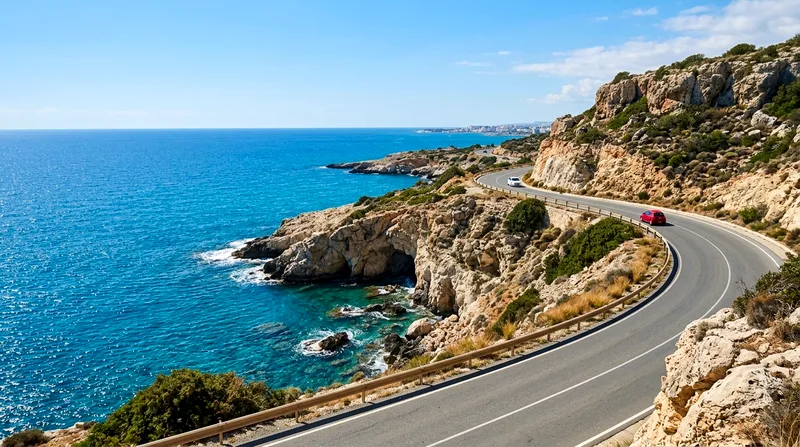
Renting a car is the only practical way to do this 7 day Cyprus route. Roads are generally good, driving is on the left, and the motorway network connects Larnaca, Limassol, Paphos, and Nicosia efficiently. Mountain and Akamas roads are a different story — narrow, occasionally unpaved, and slower than the GPS estimate suggests.
Book your rental before arrival, especially in July and August when demand from European travelers pushes prices up and automatic transmissions sell out first. A compact car is fine for the whole trip except the Akamas day, where ground clearance matters. Fuel is sold in litres and unleaded is widely available; expect to spend roughly €50–70 on fuel across the week depending on how much you detour.
One genuine annoyance: road signage switches between Greek and transliterated spellings inconsistently (Troodos versus Trodos, for instance), so a GPS app with offline maps is more reliable than paper signage alone. I wouldn't rely on rural bus schedules for this itinerary — they exist, run infrequently, and don't reach most of the villages or the Akamas at all.
Where to Base Yourself
Three bases make more sense than moving hotels every night: Larnaca or Limassol for days 1–3, Paphos for days 4–5, and one night in the Troodos before finishing near Nicosia or back at Larnaca airport. This cuts total driving time and packing hassle compared with a different hotel every single night.
Limassol works better than Larnaca as your first base if nightlife and a livelier marina scene matter to you; Larnaca is quieter and closer to the airport, which suits an early flight home. Paphos is non-negotiable as the western base — it's the only town positioned to reach both the archaeological park and the Akamas without excessive driving.
Compared with Malta, where distances are small enough to base in one place the whole trip, Cyprus is bigger and genuinely rewards moving bases. Compared with Corfu or Mallorca, Cyprus's interior (the Troodos) offers more elevation and village character than either island's hill country, which is one reason I'd push back against itineraries that skip the mountains entirely to save a day at the beach.
Larnaca, Limassol, and Paphos each serve a different stretch of this one-week Cyprus route, so picking the right base saves hours of driving.
Cyprus 7-day itinerary bases compared: location, drive times, and best for
| Base | Distance to airport | Best for | Drive to next base |
|---|---|---|---|
| Larnaca | 10 min (Larnaca airport) | Arrival, quiet evenings, budget stays | 50 min to Limassol |
| Limassol | 50 min to Larnaca airport | Marina dining, wine region access | 1 hr to Paphos |
| Paphos | 1 hr to Paphos airport | Archaeology, Akamas day trips | 1.5 hr to Troodos |
| Troodos village | 1.5–2 hr to either airport | Mountain hikes, frescoed churches | 1 hr to Nicosia |
Drive times are approximate and assume normal traffic; mountain roads take longer than GPS estimates suggest.
Optional Bookable Experiences
A handful of experiences across this week are worth reserving ahead rather than winging it. The Larnaca or Limassol sunset boat tour on Day 1 or 2 is low-effort and a good way to see the coastline from the water. The Akamas boat trip from Latchi on Day 5 solves the unpaved-road problem entirely and is popular enough in summer that same-day booking isn't guaranteed. A guided wine-tasting tour through the Vouni Panayias villages on Day 3 removes the drink-and-drive problem on mountain roads with no shoulder.
If you're traveling with kids, a half-day snorkeling or glass-bottom boat trip off Protaras or Ayia Napa (a detour from this route, about 40 minutes east of Larnaca) is worth considering as a swap for one inland day — children often tire of ruins faster than adults do. Anglers should look at half-day fishing charters out of Limassol or Paphos marinas, usually running 4–5 hours and including gear.
Compare current boat tours, wine tastings, and day trips before you book, since availability and pricing shift by season and operator.
Frequently asked questions
Is a week enough time to see Cyprus?
A week is enough to cover the coast from Larnaca to Paphos plus one night in the Troodos, but not enough to add Ayia Napa's beaches or linger properly anywhere. If this is your only trip, this route hits the main archaeological sites, a wine region, and mountain villages without feeling rushed — just accept you're skipping the far east coast.
Do I need a car to explore Cyprus?
Yes, effectively. Buses connect Larnaca, Limassol, Paphos, and Nicosia but run infrequently and don't reach the Troodos villages or the Akamas Peninsula at all. A rental car costing roughly €25–40 a day in low season is the only way to follow this itinerary as written.
What's the best base for a week-long trip?
No single base covers the whole island well — that's why this itinerary uses three. Paphos is the most strategic single base if you had to pick one, since it reaches the Akamas, the archaeological park, and the edge of the Troodos within 60–90 minutes.
Can I visit both coasts in seven days?
You can reach the south and west coasts comfortably in a week, but adding the east coast (Ayia Napa, Protaras) means cutting something else — most likely the Troodos night or a full day in the Akamas. Treat the east coast as a separate trip or a day trip from Larnaca instead.
What activities are best for families?
Shorter sites with clear payoff work better than full archaeological parks for younger kids — the Blue Lagoon swim, Larnaca Fort, and a glass-bottom boat trip hold attention better than two hours of mosaics. Break up driving days with a swim stop and keep the Troodos hike short, under an hour, for children under ten.