Book guided Cyprus food tours featuring meze tastings and street food across Nicosia, Limassol, and Paphos. Compare group sizes, dietary options, and inclusions.
Who Cyprus Food Tours Suit Best
A Cyprus food tour works best for travelers who want structure without losing the sense of discovery. You're handed a sequence of six to ten stops — a halloumi producer, a street souvlaki stand, maybe a small winery pouring commandaria — and someone walks you through the history behind each dish instead of leaving you to guess from a menu translated badly into English. That's the real draw: context, not just calories.
It suits people with limited time in a city more than it suits slow travelers. If you've got five days in Paphos and want to understand Cypriot food in one evening rather than hunting through reviews for three nights running, a guided tasting walk does the legwork. It's also a smart choice for anyone nervous about ordering in a country where menus mix Greek, Turkish, and English inconsistently depending on the taverna's ownership history.
It suits groups less well than you'd think. Large families with young children often struggle — these tours involve two to three hours of standing, walking, and waiting between courses, which tests the patience of anyone under ten. I wouldn't book one with a toddler in tow; the pacing assumes adult attention spans and adult portion control.
Solo Travelers and Small Groups
Solo travelers get disproportionate value from food tours in Cyprus, because eating out alone in a culture built around shared meze platters can feel awkward otherwise. Meze is designed for groups — ten or more small dishes meant to be passed around — so a solo diner at a taverna often ends up with a scaled-down, less interesting version of the meal. Joining a group tour of six to twelve people solves that instantly: you get the full shared-plate experience without needing to recruit dinner companions. Couples and pairs of friends get a similar benefit but with more flexibility, since many operators offer private or semi-private bookings for two to four people at a different pace and sometimes a different price tier.
Dietary Requirements and Preferences
Cypriot cuisine leans heavily on grilled meat, halloumi, and olive oil-based dips, so vegetarians are usually well served — tours typically include several plant-based meze dishes by default, since that's how a traditional spread is built anyway. Vegans have a harder time, since halloumi and yogurt-based dips (talattouri, tzatziki) appear on almost every table and substitutions aren't always planned in advance. If you're vegan, email the operator at least 48 hours before the tour date and ask specifically what will replace the dairy-heavy courses — don't assume a general "dietary notes" field in the booking form gets read carefully. Gluten-free travelers should ask about the bread and pastry stops separately, since those are often the hardest items to swap out on a walking format.
Main Food Tour Types by City
Cyprus doesn't have one food tour format — it has three distinct ones, shaped by each city's layout and history. Nicosia's walled Old Town gives you a dense, walkable circuit through a genuinely mixed Greek-Turkish food culture. Limassol spreads things out more, pairing street food with the island's wine industry since several commercial wineries sit within a short drive of the city center. Paphos tours lean coastal and village-based, often including a short transfer out to a taverna that doesn't see passing foot traffic at all.
Picking the right city matters more than picking the right company, honestly. A Nicosia food tour book will usually promise authenticity and history; a Limassol one promises variety and wine; Paphos promises a quieter, more rural picture of Cypriot cooking. None of them is objectively better — it depends what you came for.
Nicosia suits history-focused walkers, Limassol suits wine lovers, and Paphos suits those who prefer a slower, seated format.
Cyprus food tour types compared by city, group size, and pace
| Tour Type | Typical Duration | Group Size | Pace | What's Usually Included |
|---|---|---|---|---|
| Nicosia Old Town meze walk | 2.5-3 hours | 6-12 people | Moving, walking-heavy | 6-9 tastings, guide commentary, no alcohol by default |
| Limassol street food & wine | 3-3.5 hours | 8-15 people | Moderate, some transfers | Street snacks, wine or zivania tasting, waterfront finish |
| Paphos village taverna tasting | 2-3 hours | 6-10 people | Mostly seated | Minibus transfer, full meze meal, limited walking |
| Private/small-group option (any city) | 2-3 hours | 2-4 people | Flexible | Customisable stops, dietary substitutions easier |
Typical figures based on common tour formats; confirm exact duration, inclusions, and group size when you check prices and availability.
Nicosia Meze and Heritage Walks
Nicosia's Old Town is the most interesting setting for a Cyprus culinary walking tour simply because it's a divided capital — the only one left in Europe — and food here carries that history visibly. A typical route moves through narrow lanes near Ledra Street, stopping at bakeries, a halloumi or loukoumi (Cypriot delight) specialist, and a family-run taverna for the main meze course. Expect two to three hours, six to nine tasting stops, and a strong emphasis on storytelling over the Green Line and the city's Ottoman and Venetian layers. The trade-off: less greenery, more concrete and traffic noise than Limassol or Paphos tours, so it's a better fit if you're genuinely interested in urban history alongside the food.
Limassol Street Food and Wine Tours
A Limassol street food tour typically pairs grilled street snacks — souvlaki wraps, sheftalia (a herby sausage in caul fat) — with at least one stop for local wine or zivania, the Cypriot spirit distilled from grape pressings. Limassol's food scene sits closer to its marina and old town than Nicosia's does, so these tours often finish near the waterfront, making them easy to combine with an evening stroll or a boat trip booked for the next day. Group sizes here run slightly larger on average, and the wine-focused versions can stretch past three hours. If you don't drink, ask upfront whether the wine tasting portion is swappable for extra food stops — some operators accommodate this, some don't.
Paphos Coastal and Village Tastings
Paphos tours tend to be the most relaxed of the three, often built around a minibus transfer to a village taverna outside the tourist strip near the harbor. Expect fewer walking stops and more sit-down courses — sometimes a single long meze meal rather than a moving tasting trail. This format suits senior travelers and anyone who finds standing-room tastings tiring. The downside is you see less of the city itself; if street-level immersion is what you want, Paphos isn't the strongest option compared to Nicosia or Limassol.
What to Compare When Booking
Don't book the first Cyprus food tour that shows up in search results. The category is broad enough that two tours with near-identical names can differ hugely in pacing, portion size, and what's actually covered in the price. Read the operator's own description closely — not just the star rating — because "tastings" can mean a generous full meal or six bite-sized samples depending on how it's run.
Group Size and Pace
Group size shapes everything about the experience. Tours capped around six to eight guests move faster through questions and let the guide actually engage with you; anything over fifteen starts to feel like a shuffling queue, especially in Nicosia's narrower lanes where groups bottleneck at doorways. Ask whether the tour is fixed-group or can merge with another booking on quiet days — some operators combine smaller bookings to hit a minimum, which changes the dynamic. If pace matters to you, a private or small-group version costs more but moves at your speed, not the slowest walker's.
Inclusions and Portion Sizes
"All-inclusive" on a tour listing sometimes means food only, sometimes food and soft drinks, sometimes food, wine, and a coffee or dessert stop. Check specifically whether alcohol is included or an optional add-on — Limassol wine tours vary a lot here. On portions: a well-run meze tour should leave you genuinely full, not peckish. If the listing mentions fewer than six distinct tastings over two-plus hours, that's a sign of a thinner itinerary than advertised, and I'd look elsewhere.
Cancellation and Dietary Policies
Weather and minimum group numbers are the two most common reasons Cyprus food tours get cancelled or rescheduled, particularly outdoor walking formats in Nicosia and Limassol during heavy rain (rare but not unheard of between November and February). Look for a clear free-cancellation window — 24 to 48 hours before departure is standard practice across most booking platforms — and confirm whether dietary requests need advance notice in writing. A tour that only asks about allergies on the day, verbally, is one I'd be cautious about if you have a serious restriction.
Best Time to Book Your Tour
Timing affects both availability and comfort on a Cyprus food tour more than people expect, since this is a walking-based activity in a Mediterranean climate that gets genuinely uncomfortable in peak summer.
Seasonal Availability and Weather
July and August push daytime temperatures past 35°C regularly, which is why most food tours run in the early evening during those months — a good move, since walking Nicosia's Old Town at 2pm in August is miserable regardless of how good the halloumi is. Spring (April-May) and autumn (late September-October) give you the best combination of pleasant walking weather and still-active tourist infrastructure. Winter tours run too, but with a smaller pool of available dates since demand drops; you'll find more flexibility but occasionally thinner guide rosters.
Advance Booking Windows
Popular evening slots in Nicosia and Limassol during peak season (June through September) can sell out three to five days ahead, especially for smaller-capacity or private tours. Booking a week or two in advance is sensible if you have a fixed itinerary; if you're more spontaneous, weekday tours generally have better last-minute availability than Friday or Saturday evening slots, which locals and tourists both tend to book first. Always compare current prices and reviews before booking, since availability and exact costs shift with season and demand.
Frequently asked questions
What is meze and how much will I eat on a Cyprus food tour?
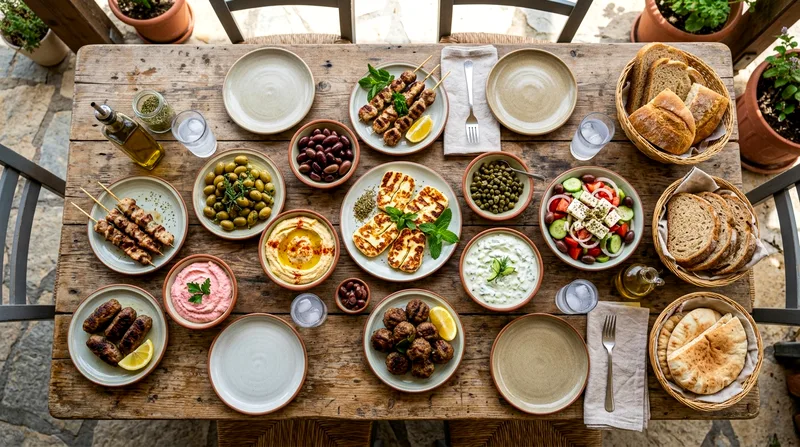
Meze is a spread of small shared dishes — typically ten or more on a full traditional table — ranging from dips like tahini and taramas to grilled halloumi, olives, and skewered meats. On a guided tour you won't get a full restaurant-style meze table at every stop; instead, expect curated tastings across six to nine locations, which together add up to a substantial meal. Pace yourself early — the later stops are usually heavier.
Do Cyprus food tours accommodate vegetarian and vegan diets?
Vegetarians are generally well accommodated since Cypriot meze already includes multiple vegetable, dip, and halloumi-based dishes by tradition. Vegan travelers need to flag it directly with the operator before the tour, ideally 48 hours ahead, since dairy (halloumi, yogurt-based dips) appears constantly and substitutions require advance planning rather than on-the-spot improvising.
What's the typical group size for Cyprus food tours?
Most group tours run between six and fifteen people, with Nicosia's Old Town walks often staying smaller due to narrow streets, and Limassol's street food and wine tours sometimes running larger. Private or small-group options for two to four people are widely offered at a higher price if you want more flexibility and direct guide attention.
Can I cancel or reschedule a booked food tour?
Most operators allow free cancellation or rescheduling 24 to 48 hours before the start time, though exact terms vary by listing. Weather-related rescheduling is common for outdoor walking tours in winter months. Always check the specific cancellation policy on the booking page rather than assuming a standard industry rule applies.
Which Cyprus city has the best food tours for beginners?
Nicosia is the strongest starting point if you want history alongside food, since the divided Old Town adds context you won't get elsewhere. If you'd rather sit, eat, and relax without much walking, a Paphos village tasting is gentler and easier for first-timers or travelers with mobility concerns.