Cyprus wine tour vs self-drive compared: cost, tasting limits, drink-driving laws, and crowds — so you can pick the right way to visit Krasochoria.
The Options at a Glance
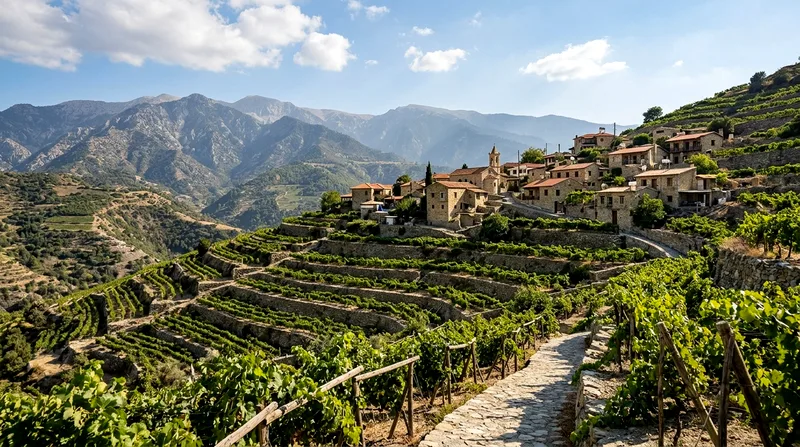
Cyprus's wine country sits mostly in the Troodos foothills, in a cluster of villages locally called Krasochoria — literally "wine villages" — south and west of the mountains, within reach of Limassol, Paphos, and, with more driving, Nicosia and Larnaca. The debate over Cyprus wine tour vs self-drive isn't abstract: it changes how much you taste, how relaxed the day feels, and whether you end up white-knuckling a rental car down a switchback with a stomach full of Commandaria.
Guided tours and self-drive visits solve different problems. A tour solves the drinking problem — someone else drives, so you taste properly. Self-drive solves the freedom problem — you choose the pace, skip villages that don't interest you, and linger wherever the Commandaria is good. Neither is objectively better; it depends on what you're optimizing for on the day.
A guided tour costs more but removes the drink-driving problem entirely, while self-drive is cheaper per person in a full car but limits how much the driver can actually taste.
Cyprus wine tour vs self-drive: cost, time, and tasting comparison
| Option | Typical cost per person | Wineries per day | Driving required | Tasting freedom | Best for |
|---|---|---|---|---|---|
| Guided wine tour | €60–€110 | 3–5 | None | Full tasting for everyone | Couples, solo travelers, groups without a driver |
| Self-drive (shared car, 4 people) | €15–€25 plus fuel | 2–4 | Yes, one designated driver | Limited for the driver | Independent travelers, flexible schedules |
| Self-drive (solo or 2 people) | €30–€50 plus fuel | 2–3 | Yes | Very limited for driver | Those prioritizing route control over tasting volume |
| Private driver/guide hire | €150–€250 total | 4–6 | None | Full tasting, custom pace | Families, small groups wanting flexibility without driving |
Figures are typical ranges; confirm current rental and tour prices before booking, as they shift seasonally.
What a guided wine tour includes
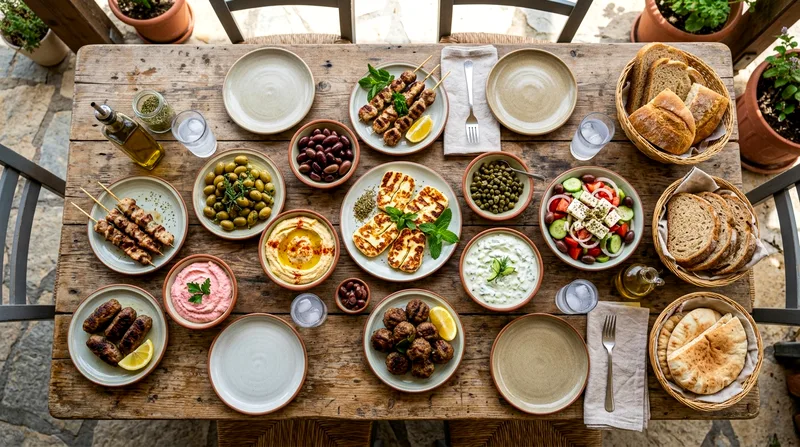
A typical Cyprus wine tour picks you up from a hotel in Limassol or Paphos, drives a minibus (usually 8–15 people) up into the Troodos foothills, and stops at three to five wineries over six to eight hours. Most itineraries include a mix of larger commercial producers and small family cellars in villages like Omodos, Vouni, or Kilani, often with a lunch stop featuring mezze and local cheese. Tastings are poured by staff at each winery, usually four to six samples per stop, and a guide handles logistics, translation where needed, and commentary on Commandaria's protected-origin status — it's one of the oldest named wines still in production, with roots tracing to the Crusader era. You don't drive, you don't navigate, and you don't need to worry about limits.
What self-drive winery visits offer
Self-drive means renting a car — widely available in Limassol, Paphos, and Larnaca airport, from roughly €30–€50 a day for a small hatchback, more for an SUV if you want ground clearance for rougher village roads. You build your own route: maybe Omodos and Vasa in the morning, lunch in a taverna, then Vouni or Lofou in the afternoon. Many wineries welcome walk-ins without reservations, though the larger ones (particularly around Limassol) appreciate a phone call or email ahead, especially outside peak season. The appeal is obvious — nobody rushes you, and you can skip a village entirely if the first stop was underwhelming. The catch is equally obvious: somebody has to stay (mostly) sober.
Head-to-Head: Time, Cost, and Effort
Time and money pull in opposite directions depending on group size, and this is where the Cyprus wine tour vs self-drive decision gets concrete rather than philosophical.
Time commitment and scheduling
A guided tour runs on a fixed schedule — typically a 9am pickup and a 5 or 6pm drop-off, six to eight hours door to door, with stops pre-arranged so you're not waiting around for a winery to unlock a tasting room. Self-drive gives you control over timing but costs you planning hours beforehand: working out which wineries are open on your chosen day (many rural cellars keep shorter hours midweek or close for lunch between 1 and 3pm), mapping a sensible loop so you're not backtracking across the Troodos foothills, and building in a buffer for Cyprus's narrow village roads, which are slower than they look on a map. Budget at least 40 minutes between villages, not the 15–20 minutes Google Maps sometimes suggests on mountain routes.
Budget comparison
For a solo traveler or a couple, a guided tour at roughly €60–€110 per person often works out close to, or cheaper than, self-drive once you add car rental, fuel, parking, and the opportunity cost of the driver not tasting. For a full car of four adults splitting a €35 rental plus fuel, self-drive is clearly cheaper — maybe €20 per person total — but only one person drives, which means three-quarters of the group gets the full experience and one doesn't. If everyone wants to taste, you're looking at a private driver or taxi-for-the-day arrangement, which typically runs €150–€250 for the group and erases most of the savings.
Tasting Quantity and Drink-Driving Rules
This is the section that actually decides the debate for most people, because Cyprus takes drink-driving seriously and the arithmetic doesn't favor the self-driving taster.
How many tastings you'll do
On a guided tour, four or five wineries at four to six pours each means you're trying 20–25 wines across a day — a proper survey of Krasochoria styles, from dry Xynisteri whites to sweet Commandaria. Self-driving solo, you're realistically tasting one or two small pours per stop before you have to stop entirely, and even that pushes close to the legal limit depending on your weight and how recently you ate. Spitting is an option — tasting rooms in Cyprus do provide spit buckets, more at the larger commercial wineries than the small family cellars — but plenty of visitors find it awkward to spit out a €15 reserve Commandaria they were handed by the owner's grandmother.
Cyprus drink-driving laws explained
Cyprus's legal blood alcohol limit for driving is 50 mg per 100 ml of blood — stricter than the UK's 80 mg but in line with most of continental Europe, including Crete and Rhodes under Greek law. For context, that's roughly one small glass of wine for an average adult before you're near the line, and tasting-room pours add up faster than people expect because you're sampling across two or three hours, not drinking steadily. Police do run checkpoints on roads near Limassol and in the Troodos foothills, particularly on weekends, and penalties include fines starting around €125–€500 plus possible license suspension, scaled to how far over the limit you are. If you're self-driving, the only honest options are a strict designated driver who doesn't taste at all, or everyone spitting — genuinely, not symbolically.
Crowds and Experience Quality
Group size changes the texture of a winery visit more than people expect, and it's worth being honest about what you're giving up either way.
Group size and intimacy
Minibus tours mean you're tasting alongside 8 to 15 strangers, which works fine at larger wineries with proper tasting rooms but feels crowded at the small family-run cellars in villages like Kilani or Lofou, where the owner might be pouring from a single barrel in a space meant for six people, not sixteen. Self-drive groups, especially couples or families of three or four, get a much more personal version of the same stop — more questions answered, more chance the owner walks you through the actual barrel room instead of a scripted tasting menu. If an intimate, conversational visit matters more to you than seeing five wineries in a day, self-drive wins this point clearly.
Flexibility and personalization
Tours run a fixed route chosen by the operator, usually weighted toward wineries with group-tasting infrastructure and parking for a minibus — which means some of the more interesting micro-producers in Vouni or Vasa get skipped entirely. Self-drive lets you chase a specific recommendation, extend a stop that's going well, or add a detour toward the Akamas Peninsula or a coastal lunch in Paphos on the way back. The trade-off is you're also responsible for finding parking on narrow village streets, which in Omodos during peak season (June–September weekends) can take fifteen frustrating minutes you didn't budget for.
Who Should Choose Which Option
Solo travelers and couples without a third wheel to drive should lean guided — the math on tasting freedom versus cost almost always favors the tour, and you meet other travelers over a shared lunch, which solo visitors often mention as an underrated upside. Families with children benefit from self-drive instead: a guided wine tour isn't built around kids, pacing is adult-focused, and lunch stops assume everyone's drinking, which makes for an awkward day with a six-year-old in tow. A family car means you can combine one or two wineries with a stop at a playground in Omodos or a swim near Limassol.
Senior travelers who find mountain roads tiring or who'd rather not navigate unfamiliar hairpin bends should book guided — Troodos roads involve real elevation change and switchbacks that are more demanding than they look on a map. European travelers and world travelers used to renting cars confidently abroad will likely find self-drive straightforward, since Cyprus drives on the left (a holdover from British rule) and road signage is in English as well as Greek. Boaters and anglers squeezing in a wine day around a charter from Larnaca or Paphos marina should favor a guided tour — it fits into a tighter single-day window without the logistics of returning a rental car on a schedule.
The Verdict
Choose a guided tour if tasting properly matters more to you than total control over the itinerary — it removes the drink-driving calculation entirely and covers more wineries per day. Choose self-drive if you're traveling with a non-drinking partner or a small group happy to rotate who drives, and you value lingering over a packed schedule. Just don't kid yourself about the legal limit: 50 mg/100 ml disappears fast once you're sampling Commandaria at four stops, and a fine or license suspension will cost you far more than the tour would have.
Either way, treat the wine villages as one piece of a broader Cyprus itinerary — pair a Troodos wine day with a hiking morning in the same mountains, or a coastal afternoon near Paphos, rather than trying to cram wine tasting and serious driving into the same hours.
Frequently asked questions
Is it legal to drink and drive in Cyprus?
Not above 50 mg of alcohol per 100 ml of blood — stricter than UK limits and similar to most EU countries. In practice that's roughly one small glass of wine for an average adult, so tasting at even two wineries can put a driver over the limit. Checkpoints are common near Limassol and in the Troodos foothills, especially on weekends, with fines typically starting around €125–€500.
How much does a guided wine tour cost?
Expect roughly €60–€110 per person for a six-to-eight-hour tour covering three to five wineries, usually including lunch and hotel pickup from Limassol or Paphos. Prices vary by group size and whether lunch is full sit-down or mezze-style, so check current pricing and inclusions when you book.
Can you visit multiple wineries in one day?
Yes — guided tours typically manage three to five stops in a day, while self-drive visitors usually manage two to four comfortably, given narrow roads and variable opening hours. Trying to cram in more than five generally rushes the experience and leaves little time to actually enjoy any single stop.
Do I need an international driving permit in Cyprus?
EU licence holders can drive with their home licence alone. Non-EU visitors, including those from the US, Canada, and Australia, should carry an International Driving Permit alongside their home licence, since some rental companies and police checks ask for it specifically.
Which wine regions are easiest to self-drive?
The Krasochoria villages closest to Limassol — Omodos, Vouni, and Vasa — have the best-maintained roads and clearest signage, making them the easiest starting point for a first self-drive day. Villages further into the Troodos interior, like Kilani or Lofou, involve narrower roads and steeper grades, better suited to drivers already comfortable with mountain driving.