Plan your Zenobia wreck dive in Larnaca: certification needed, booking options, typical costs, best season, and nearby Cyprus dive sites.
What Is the Zenobia Wreck and Why Dive It
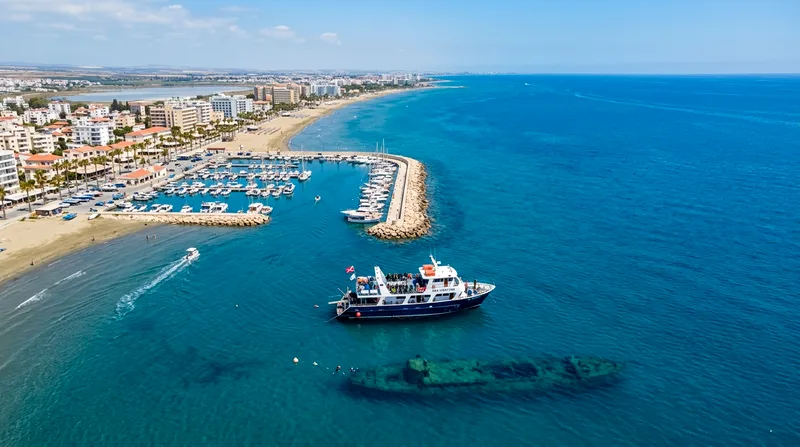
The Zenobia is a Swedish-built roll-on/roll-off ferry that sank off Larnaca, Cyprus, in June 1980 after a steering-system fault caused it to list and eventually capsize while still fully loaded with cargo — over a hundred articulated lorries never made their delivery. It now lies on its port side in the Mediterranean Sea roughly a mile off Larnaca's coastline, close enough that you can see the shoreline and Larnaca Salt Lake from the boat ride out. That proximity is part of what makes it unusual: you get a genuinely deep, complex wreck without an hour-long open-water crossing.
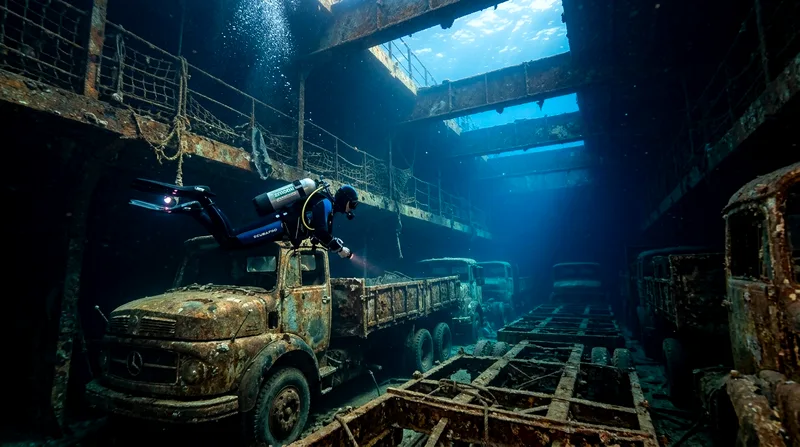
What makes the Zenobia a world-class dive isn't just the size — it's 178 meters long — but the fact that the cargo is still there. Trucks, their wheels still attached, sit lashed to a deck that's now a wall rather than a floor. Divers who've done wrecks in Malta or around Rhodes often say the Zenobia has more "stuff" to look at per dive, because the ferry sank with its load intact rather than being scuttled empty for diving tourism, which is how most artificial reef wrecks around the Mediterranean end up.
I'd rate the Zenobia above most wrecks you'll find near Crete or Corfu for sheer scale and penetration potential, but it's not a beginner's answer to "what's a cool wreck dive in Europe." The ship's hull, the darkness inside the cargo holds, and depths that run from around 16 meters at the shallowest point to beyond 42 meters at the stern put real technical demands on anyone who wants to see more than the top deck.
Certification and Experience Requirements
This isn't a site where a resort course cuts it. Reputable Larnaca dive centers will ask to see your certification card and log book before letting you anywhere near the boat, and they're right to.
The deeper and more enclosed the route on the Zenobia, the higher the certification and experience bar operators will require.
Zenobia wreck dive requirements compared by certification level
| Dive Route | Depth Range | Minimum Certification | Guiding Ratio |
|---|---|---|---|
| Main deck / shallow starboard side | 16-25m | PADI Advanced Open Water | Up to 6:1 |
| Mid-hull exterior | 20-30m | Advanced Open Water + Nitrox | 4:1 |
| Stern and propeller area | 30-42m | Wreck Specialty recommended | 4:1 |
| Cargo hold penetration | 20-35m (interior) | Wreck Specialty required | 2:1 or 3:1 |
| Engine room / full penetration | 30-42m | IANTD/TDI technical certification | 2:1 |
Depths and ratios are typical industry practice; individual operators set their own minimums, so confirm requirements directly before booking.
Minimum certification levels
For the shallower sections — the starboard side and main deck areas sitting around 16 to 25 meters — a PADI Advanced Open Water certification (or equivalent from SSI, BSAC, or similar agencies) is generally the baseline operators want to see, along with recent dive experience, ideally within the last six to twelve months. For the deeper stern sections, engine room, and any real penetration into the cargo holds, operators typically expect a Wreck Diving specialty certification, and for the most technical routes — full penetration beyond the light zone, or dives past 40 meters — an IANTD or TDI technical certification with appropriate gas planning experience is the realistic requirement, not just a suggestion. Nitrox certification is almost universally recommended given the depths and multiple daily dives most itineraries offer.
Depth and technical considerations
The wreck's depth range — 16 to 42 meters depending on where you are on the hull — puts large parts of it beyond recreational no-decompression limits if you're not careful with dive planning. Currents around the Zenobia can run stronger than divers expect given how sheltered Larnaca Bay looks from the surface, particularly near the stern. Silt-outs inside the cargo holds are a real risk for anyone without wreck-specific training — visibility inside the ship can drop to near zero in seconds if a diver kicks up decades of fine sediment. I'd avoid any operator who offers to take uncertified or marginally certified divers into the interior; that's exactly how wreck-diving fatalities happen, and the Zenobia has had a few over the decades.
How to Book Your Zenobia Dive
Booking the Zenobia is straightforward in principle — Larnaca has one of the highest concentrations of dive centers in Cyprus, almost entirely because of this one wreck — but the quality gap between operators is wide enough to matter.
Guided tours vs. independent diving
Independent diving on the Zenobia, in the sense of renting a boat and going it alone, isn't really a practical option for visitors — nearly all diving here happens through licensed Larnaca dive centers that control boat access, mooring lines, and guiding. What you're choosing between is really "guided dive with a dive master" versus "guided technical dive with a wreck specialist," not guided versus unguided. Even highly experienced wreck divers who've logged dives on the Thistlegorm in the Red Sea or wrecks around Sicily typically dive the Zenobia with a local guide the first time, mainly because the internal layout and silt conditions reward local knowledge. If you've got your own technical certification and want more autonomy, some operators allow buddy teams to dive semi-independently within agreed limits — but you'll need to arrange that specifically, it's not the default.
Choosing a dive operator
Look for PADI 5-Star or equivalent accreditation, a visible safety record, and staff who ask you detailed questions about your certification and recent diving history rather than just checking a card exists. A good operator will also offer Nitrox fills, proper decompression stops built into the dive plan, and oxygen on the boat as standard safety kit. Be wary of operators advertising "Zenobia for everyone" or bundling it into general sightseeing packages aimed at casual tourists — that's a red flag for a site with this depth profile. Compare a few Larnaca-based centers, check what's included in terms of guiding ratios (ideally no more than four divers per guide for the deeper routes), and always confirm current prices and availability directly before booking.
Tickets, Costs and What's Included
Pricing for the Zenobia dive follows a fairly standard Mediterranean dive-center structure, though it sits a notch above basic reef dives because of the depth, guiding ratios, and gas requirements involved.
Typical pricing structure
A single two-tank boat dive to the Zenobia typically runs in the same general range as other serious wreck-diving destinations in the Mediterranean — expect to pay noticeably more than a standard reef dive you'd book in Malta or around Mallorca's coast, largely because of the specialized guiding and equipment involved. Multi-dive packages across two or three days usually bring the per-dive cost down. Full equipment rental, Nitrox fills, and technical gear (stage bottles, for deeper penetration routes) are generally priced separately from the base dive fee, so a quoted "starting price" rarely reflects what a fully kitted technical diver will actually pay. Always ask for a full breakdown before booking rather than assuming the advertised figure is the final one — check current prices and package details directly with operators when booking.
What to expect in package inclusions
Standard inclusions across most Larnaca operators cover boat transport to the site (around 20-30 minutes from Larnaca Marina), tank fills, weight belts, and a dive guide. Wetsuit, BCD, and regulator rental usually cost extra unless you've specifically booked an "all-inclusive" package. Surface intervals between the two dives typically happen on the boat with refreshments, not back at the shop, which is a nice touch many operators in Rhodes or Corfu don't bother with. If you want penetration into the cargo holds or engine room, confirm in advance that this is included — some operators treat interior access as a separate, higher-tier booking requiring additional certification proof.
Best Time to Dive the Zenobia
Cyprus dive season runs roughly from April through November, with the Zenobia diveable year-round for well-equipped operators, though conditions vary enough to matter for trip planning.
Seasonal conditions and visibility
Visibility on the Zenobia typically ranges from 15 to 30 meters, with the clearest water generally from late spring through early autumn — May through October is the stretch most dive centers point to as peak season. Water temperature during these months sits comfortably in the low-to-mid 20s Celsius, dropping into the high teens by winter, which matters more than people expect given how long a Zenobia dive can run once you're planning decompression stops. Winter diving is possible and some operators run it, but fewer boats go out and conditions are more weather-dependent.
Weather and sea state factors
Larnaca Bay is relatively sheltered compared to the more exposed Akrotiri Peninsula further along the coast, but summer afternoon winds can still kick up a chop that makes the surface swim to the mooring line unpleasant, if not the dive itself. Morning departures are standard for exactly this reason — most boats leave by 9am. If you're traveling specifically for this dive, I'd build in at least one buffer day; a single windy day can cancel a trip, and chasing a flight home the same afternoon as your dive isn't a plan I'd recommend anyway, given recommended surface intervals before flying.
Nearby Dive Sites and Add-Ons
Most divers flying to Cyprus specifically for the Zenobia end up staying three to five days, which leaves room to build out a proper dive itinerary rather than a single bucket-list tick.
Other wrecks and reefs near Larnaca
Larnaca itself has a handful of shallower reef and cave dives suitable for recovery days between deeper Zenobia sessions, useful for managing nitrogen loading if you're doing multiple days on the wreck. Further around the coast near the Akrotiri Peninsula, there are additional wreck and reef sites worth a day trip, generally shallower and more forgiving than the Zenobia, good for mixed groups where not everyone is wreck-certified. Compared to the reef diving you'd find around Rhodes or the volcanic underwater terrain near Santorini, Cyprus's non-Zenobia sites are honestly a bit unremarkable — the Zenobia is really the headline act here, and everything else is a supporting program.
Multi-dive packages and extensions
Operators commonly offer three, five, or ten-dive packages combining multiple Zenobia visits with reef dives, which usually works out cheaper per dive than booking single trips daily. If you're working toward a Wreck Specialty certification, some Larnaca centers run the full course using the Zenobia itself as the training site, which is a genuinely efficient way to combine certification and experience rather than training on a lesser wreck first. Ask whether night dives on the wreck are offered — a handful of operators run them, and the cargo holds take on a different character under torchlight, though this is strictly for already wreck-experienced divers.
Frequently asked questions
What certification do I need to dive the Zenobia?
At minimum, a PADI Advanced Open Water certification (or equivalent) with recent diving experience logged within the last six to twelve months. For cargo hold penetration or the deeper stern sections, operators generally require a Wreck Diving specialty, and full technical penetration dives call for IANTD or TDI-level certification.
How deep is the Zenobia wreck?
The wreck lies on its port side with depths ranging from around 16 meters at the shallowest accessible points down to beyond 42 meters at the stern. Most recreational dives stay in the 16-30 meter range; anything deeper edges into decompression and technical diving territory.
How much does a Zenobia dive cost?
A standard two-tank boat dive sits in line with other serious Mediterranean wreck-diving destinations, generally higher than a basic reef dive due to guiding ratios and gas needs. Equipment rental, Nitrox, and technical gear are usually priced separately — always check current prices and full inclusions with the operator before booking.
What is the best season to dive the Zenobia?
May through October offers the clearest visibility (typically 15-30 meters) and warmest water, in the low-to-mid 20s Celsius. Diving continues through winter with well-equipped operators, but fewer boats run and trips are more weather-dependent.
Can I dive the Zenobia independently or only with a guide?
Nearly all diving on the wreck goes through licensed Larnaca dive centers controlling boat and mooring access, so fully independent diving isn't realistic for most visitors. Technically certified buddy teams can sometimes arrange semi-independent dives within agreed limits, but this needs prior arrangement with the operator.