Compare jet ski rentals and parasailing across Cyprus resorts. Find prices, safety standards, and booking tips for Ayia Napa, Protaras, and more.
Who These Watersports Suit
Cyprus jet ski rental and parasailing draw two overlapping but distinct crowds, and knowing which one you are saves both money and disappointment. The island's calm, warm bays — particularly around Ayia Napa, Protaras and Limassol — make it one of the more forgiving places in the Mediterranean to try either sport for the first time, with conditions generally gentler than the windier coves of Corfu or the open-water stretches you'll find off parts of Crete.
That said, these are not interchangeable experiences. Jet skiing is active and physical; you're driving, steering, and getting wet. Parasailing is passive and scenic; someone else drives the boat, and you just hang in a harness and look at the view. Families with younger teenagers often gravitate toward parasailing because it requires no coordination skill, while couples and solo travelers chasing a faster pulse tend to book jet skis. Senior travelers can do either, but parasailing is the gentler choice on the body — no bouncing over wake, no gripping handlebars for twenty minutes.
Jet skiing for speed seekers
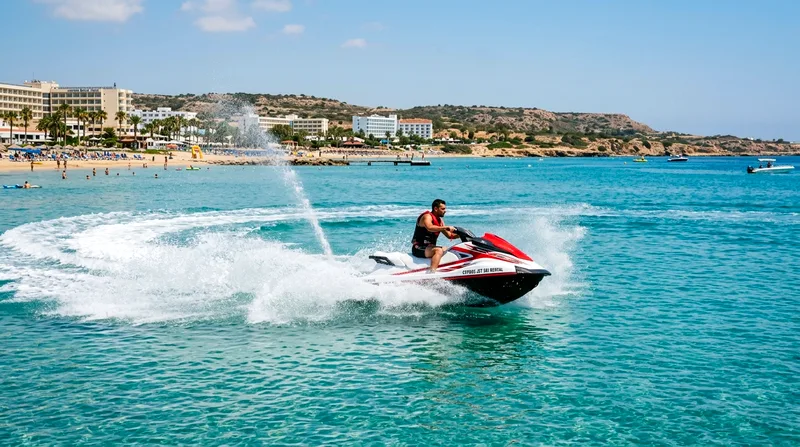
If you want control and speed, jet skiing is the obvious pick. Most rentals in Cyprus run as guided tours rather than free-roam sessions — you follow a lead guide along a marked route, usually 20 to 30 minutes, sometimes extending to an hour for premium packages. Solo riders and pairs (one driver, one passenger) are both common setups. You'll need a driving licence or passport for ID, and most operators require you to be at least 16 to drive, often 18 depending on the company's own policy — rules vary, so confirm with the specific operator rather than assuming. Expect a short briefing on hand signals and throttle control before you're sent out; depth of instruction varies a lot, which is the main quality differentiator between operators.
Parasailing for scenic thrill-seekers
Parasailing suits anyone who wants the view and the adrenaline spike of being airborne without any physical exertion. You're strapped into a harness, lifted by a canopy towed behind a speedboat, and reach heights that typically range from around 50 to 150 metres depending on the length of tow-rope the operator uses and local regulations that day. Flights usually last 8 to 15 minutes in the air, bookended by a slower boat ride out and back. Tandem and triple harnesses are standard, so couples and families can go up together, which also helps if someone in your group is nervous — going up with a companion makes the first thirty seconds much less daunting. It's a poor choice if you're scared of heights in any real sense; there is no built-in off-ramp once you're airborne.
Jet Ski vs Parasailing: Key Differences
The two activities differ enough in format, cost, and intensity that most visitors end up choosing one over the other rather than booking both — though plenty of watersports centres bundle them together at a discount if you ask.
Jet skiing is shorter and more physically intense, while parasailing offers a longer, calmer, scenic flight at a broadly similar price point.
Cyprus jet ski rental vs parasailing: duration, cost and intensity compared
| Activity | Typical duration | Intensity | Typical cost range (per person) | Best for |
|---|---|---|---|---|
| Jet ski (guided group) | 20–30 min | High | Approx. €50–€90 | Speed seekers, couples, solo riders |
| Jet ski (private/semi-private) | 30–60 min | High | Higher premium over group rate | Confident riders wanting pace control |
| Parasailing (single) | 8–15 min airborne, 30–45 min total | Low to moderate | Approx. €40–€80 | Scenic thrill, nervous flyers going solo |
| Parasailing (tandem/triple) | 8–15 min airborne, 30–45 min total | Low to moderate | Similar per-person rate, booked together | Couples, families, friends |
Figures are typical ranges based on common Mediterranean resort pricing; always check current prices and reviews directly with the operator before booking.
Duration, intensity, and cost
Jet ski sessions run shorter but hit harder physically — expect wet clothes, sore forearms if you're not used to gripping handlebars, and a genuine adrenaline spike from speed and wake-jumping. Parasailing sessions, including the boat transfer, often run 30 to 45 minutes total but only 10-ish minutes of that is actually in the air; it's calmer, quieter, and better suited to conversation and photos. On price, jet skiing in Cyprus has tended to run roughly €50–€90 for a 20–30 minute guided session depending on single or double rider setup, while parasailing has typically sat in a similar €40–€80 band per person for a standard flight — but these figures shift by season and operator, so always check current prices when booking rather than relying on last year's rate. Neither sport is cheap for the time you get; you're paying for equipment, fuel, and insurance overhead as much as the minutes themselves.
Group vs private options
Most jet ski tours in Cyprus run as small guided groups of four to ten skis following one lead guide, which keeps costs down but means you're moving at the pace of the slowest rider. Private or semi-private jet ski sessions exist at a premium, usually with more route flexibility and a chance to actually open the throttle rather than idle behind a group. Parasailing is almost always run per boat trip rather than in a fleet — the boat might tow one, two, or three flyers per trip, and you're typically slotted into whatever group has booked that departure, with less room to negotiate exclusivity unless you charter the whole boat, which is a realistic but pricier option at larger operators in Limassol and Paphos.
Top Locations: Ayia Napa, Protaras, Limassol
Location matters more than most buyers assume, because water clarity, shelter from wind, and beach crowding change the whole experience. Ayia Napa remains the busiest hub for jet ski Ayia Napa searches for good reason — Nissi Beach and the Makronissos strip have the island's highest concentration of watersports operators, which means more competition on price but also more variability in quality. Protaras, particularly around Fig Tree Bay, tends to have calmer water and a slightly more relaxed, family-oriented crowd — it's a strong pick if you want parasailing Protaras-style views over a quieter bay rather than a packed beach. Limassol's watersports scene is smaller and more spread along the longer municipal beach strip; parasailing Limassol operators often serve a mix of resort guests and locals, and prices can be marginally more negotiable outside peak July–August weeks.
Paphos and Larnaca both offer jet ski and parasailing options too, generally on a smaller scale than the Ayia Napa–Protaras corridor. Paphos suits travelers combining watersports with the Tombs of the Kings or the harbour area; Larnaca works well if you're based there for flights and want an easy add-on without traveling across the island.
Beach resort facilities and crowds
Ayia Napa's beaches get genuinely crowded in July and August, with jet ski launch zones roped off from swimmers but still busy with boat traffic — not ideal if you want open water to yourself. Protaras is gentler on this front; Fig Tree Bay is smaller and prettier but the watersports zone is correspondingly tighter, so operators here tend to cap group sizes more naturally. Limassol's beaches are longer and less resort-dense, meaning more physical space between swimmers and the watersports corridor, which some families genuinely prefer even if the sand itself is less scenic than Protaras.
Operator reputation and reviews
Don't book the first jet ski stand you walk past on the beach — reputations vary enormously even within a 200-metre stretch of sand. Check recent reviews specifically for safety briefing quality and equipment condition, not just "fun" ratings. A well-run operator will ask about your swimming ability, check weather conditions honestly rather than pushing you out in a stiff wind, and provide a life jacket that actually fits rather than whatever's left in the bin. If an operator seems to be rushing bookings through without any briefing at all, walk away — that's the biggest single red flag across all three resort towns.
What to Check Before Booking
This is the section that actually protects your money and your safety, so don't skim it. Cyprus watersports operators are subject to licensing through local municipal authorities and guidance from the Cyprus Tourism Organisation, but enforcement on the ground varies, and it's on you to vet the specific company before handing over a deposit.
Safety certifications and insurance
Ask directly whether the operator carries public liability insurance and whether guides hold recognised powerboat or jet ski instructor certification — a reasonable operator will answer without hesitation. Life jackets should be mandatory and properly fitted, not optional. For parasailing, check that the winch boat has a visible safety mechanism for quick release in an emergency, and that staff explain the hand-signal system used to communicate height and speed adjustments before you go up. If nobody mentions safety procedures unprompted, ask — and if the answer is vague or dismissive, that's worth walking away from regardless of how good the price looks.
Inclusions, group size, cancellation policy
Confirm exactly what's included: fuel, life jacket, wetsuit top (useful outside peak summer when the Mediterranean Sea is cooler), photos or GoPro footage, and transfer to the launch point if you're not staying beachfront. Group size caps matter more than people expect — a jet ski tour with twelve riders and one guide is a different, lower-attention experience than one with four. On cancellation, Cyprus watersports are heavily weather-dependent; wind over roughly 15–20 knots typically grounds parasailing and can suspend jet ski tours too. Reputable operators offer a full refund or free rescheduling for weather cancellations — get this in writing or confirmed in the booking terms before you pay, since this is the single most common source of complaint in watersports reviews across resort towns.
Best Times to Book and Visit
Timing affects both price and experience quality more than most first-time visitors realize, and it's worth planning around rather than just booking on arrival.
Seasonal demand and weather
June through September is peak season across Ayia Napa, Protaras and Limassol, with the warmest sea temperatures and the most reliable calm mornings — generally the best window for parasailing, which needs stable wind conditions to run safely. July and August bring the thickest crowds and the highest prices, plus more midday wind that can delay or cancel afternoon slots. May and October offer a reasonable compromise: sea temperatures are still comfortable, crowds thin out, and operators are more willing to negotiate or upsell extras. Compare this to Malta or Sicily, where the watersports season is shorter and choppier outside midsummer — Cyprus's longer calm-weather window is a genuine advantage if you're traveling in shoulder months.
Advance booking advantages
Booking a day or two ahead, rather than walking up to a beach stand, generally gets you a better-reviewed operator and a confirmed time slot instead of waiting around for a gap in the schedule. Early morning slots, typically 9 to 11am, tend to have calmer water and smaller groups than midday bookings. Advance online booking also makes it easier to compare reviews and cancellation terms side by side before committing — far better than deciding on the spot under a beach umbrella salesman's pressure. Compare current jet ski and parasailing prices and reviews for Ayia Napa, Protaras, and Limassol before you book, and pair the activity with a boat trip or snorkeling excursion if you want to make a full day of it on the water.
Frequently asked questions
What is the average cost of jet ski rental in Cyprus?
Guided group sessions of 20–30 minutes have typically run in the rough range of €50–€90 per jet ski, with private or extended sessions costing more. Prices shift by resort, season, and single vs double rider setup, so treat this as a ballpark and check current listings before booking.
Is parasailing safe in Cyprus?
Generally yes, when booked with a properly insured, certified operator — accidents are rare when equipment is well-maintained and wind limits are respected. The main risk comes from under-regulated operators skipping safety briefings or flying in marginal wind; vetting the company matters more than the activity itself.
Can beginners rent jet skis?
Yes — most Cyprus operators run guided group tours specifically designed for first-timers, with a short briefing and a lead guide setting the pace. You'll typically need photo ID and to meet a minimum age, often 16 to drive with restrictions, though policies vary by company.
What's included in a parasailing package?
Standard packages include the boat ride out, the harness flight itself (usually 8–15 minutes airborne), and the return trip. Life jacket is standard; photos or video are often an optional paid extra rather than included, so ask upfront if you want footage.
When is the best season for watersports in Cyprus?
June to September gives the warmest water and most reliable calm conditions, with May and October as a quieter, often cheaper alternative with still-comfortable sea temperatures. Midsummer afternoons can bring wind that delays parasailing, so morning slots are generally more dependable.