Find the best Cyprus kitesurfing lessons, compare spots and schools for beginners and advanced riders, and learn when to book for peak wind.
Who Cyprus Kitesurfing Lessons Suit
Cyprus kitesurfing lessons work for a wider range of people than most travelers assume. The island has three things a learner needs — shallow lagoons, reliable cross-shore wind for much of the year, and a cluster of schools clustered around Larnaca that run structured courses rather than one-off joyrides. That combination is rarer than it sounds; plenty of Mediterranean destinations have the wind but not the flat water, or the water but not the consistency.
That said, lessons aren't for everyone on every trip. If you're visiting in the dead calm of mid-July or August with no wind in the forecast, you could lose days waiting, and no instructor can conjure wind that isn't there. If you've got a fear of open water or can't swim competently, be upfront with the school — reputable operators will insist on a swim test or at least a buoyancy aid, and some will decline bookings without one.
Complete Beginners and Returning Riders
Complete beginners should expect a progression, not a single lesson. Most schools structure learning across three stages: kite control on land, body-dragging in water without the board, then board starts in shallow water. Compressing this into a 2-hour taster gets you kite handling and little else — fine for a trial, not for independence. Returning riders who learned elsewhere but are rusty often skip straight to board work after a short refresher, which schools usually assess in the first 30 minutes on the beach before charging for a full course.
Solo Travelers and Group Bookings
Solo travelers get matched into small group lessons at most Cyprus schools, typically two to four students per instructor, which keeps costs down but means less individual water time. If you're a solo traveler wanting faster progress, ask specifically about private 1-to-1 slots — worth the extra cost if you've only got three or four days on the island. Families or couples booking together can usually request a private group session at a flat per-person rate, which also lets kids and nervous beginners go at their own pace without holding up stronger riders.
Top Kitesurfing Spots in Cyprus
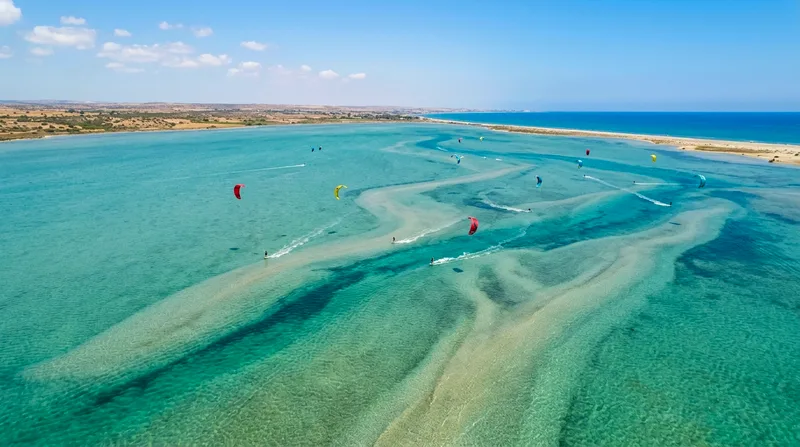
Larnaca is the center of gravity for Cyprus kitesurfing, and for good reason — the stretch near Kition Lagoon and the beaches south of the town offer a shallow, sandy-bottomed launch area with a sandbar that keeps much of the lagoon waist-deep for a long way out. It's the most forgiving water on the island and the obvious choice if lessons are your main goal rather than advanced riding. Paphos and Geroskipou Beach nearby get decent thermal wind in summer afternoons, though the coastline is more open and less sheltered than Larnaca's lagoon system.
Limassol has pockets of kitesurfable coast but is busier with other water traffic and less dedicated to the sport compared to Larnaca. Further west, the Akamas Peninsula offers wilder, less crowded conditions for riders who already know what they're doing — rockier entry points, stronger gusts funneled by the headland, and far less in the way of lifeguard or school infrastructure. Episkopi Bay, near Limassol, is known among local riders for cleaner wave conditions, making it a draw for wave-riding and freestyle practice rather than first lessons.
Lagoon and Bay Locations
The Larnaca lagoon system is the single best argument for learning in Cyprus rather than, say, Rhodes or Corfu. The water stays shallow for a long stretch, there's minimal boat traffic in the designated kite zones, and the sandy bottom means falls are forgiving. Several schools operate within a short walk of each other here, so comparing lesson structures on the day is realistic if you're flexible. The trade-off is that on light-wind days this area can go quiet faster than more exposed coasts, since it doesn't catch every thermal cycle.
Reef and Open-Water Breaks
Episkopi Bay and parts of the Akamas coast involve rockier or reef-influenced entries, stronger average wind speeds, and considerably less hand-holding. These aren't lesson venues in the beginner sense — they're where instructors themselves go to ride, and where intermediate-to-advanced students get taken once they're independently waterstarting and riding upwind. If a school offers to take you to Akamas for your first-ever lesson, treat that as a red flag rather than a bonus; it suggests either an inexperienced operator or one prioritizing scenery over safety.
Beginner vs Advanced Spots Compared
Matching your skill level to the right stretch of coast matters more in kitesurfing than in most watersports, because the wrong spot doesn't just slow your progress — it can be genuinely dangerous. A beginner dragged downwind into rocks at Akamas is a different problem than a beginner drifting across a sandy Larnaca lagoon. Below is a rough comparison to help you sanity-check what a school is offering before you commit.
Larnaca's lagoons suit first-time riders, while Episkopi Bay and Akamas reward riders who can already waterstart and ride upwind independently.
Cyprus kitesurfing spots compared: water type, difficulty and who they suit
| Spot | Water Type | Difficulty | Typical Wind | Best For |
|---|---|---|---|---|
| Larnaca / Kition Lagoon | Shallow, flat, sandy bottom | Beginner | Consistent, moderate | First lessons, progression courses |
| Geroskipou Beach (Paphos) | Open, moderate depth | Beginner-Intermediate | Afternoon thermal | Riders past basic board starts |
| Limassol coast | Mixed, busier waters | Intermediate | Variable | Riders wanting fewer dedicated facilities |
| Episkopi Bay | Open water, some chop | Intermediate-Advanced | Strong, gusty | Wave riding, freestyle practice |
| Akamas Peninsula | Rocky entry, exposed | Advanced | Strong, headland-funneled | Experienced independent riders |
Conditions vary by season and daily forecast; always confirm current wind and water state with a local school before heading out.
Kitesurf Schools and Lesson Types
Most schools clustered around Larnaca run lessons under international certification frameworks such as IKO (International Kiteboarding Organization) or VDWS, which standardizes what a "Level 1" or "Level 2" course actually covers. Ask which certification body a school follows — it's a quick way to gauge whether their curriculum is formal or improvised. A proper beginner course usually spans 6 to 12 hours of instruction, split across multiple days rather than crammed into one, since muscle memory for kite control needs rest between sessions.
Group Lessons and Private Instruction
Group lessons in Cyprus typically run two to four students per instructor and cost less per hour, but you'll spend real time standing on the beach waiting your turn with the kite. Private instruction costs more per hour — often close to double a group rate — but compresses the same skill progression into fewer total hours because you're never waiting. For a short trip of three or four days, I'd lean private, or at least a private first day followed by group sessions once you've got the basics of kite control down.
Equipment Rental and Certification Levels
Lesson packages almost always include kite, board, harness, and a buoyancy aid or impact vest, and wetsuits are usually available even though Cyprus water rarely drops cold enough to require a thick one outside winter. If you already hold an IKO or VDWS certificate from home, bring the card — several schools offer discounted independent rental once you can show proof of a recognized level, skipping the need to re-certify from scratch. Buying your own gear only makes sense if you're planning repeat trips; renting for a single holiday is cheaper and avoids airline oversize baggage fees on kite bags.
What to Look for When Booking a Cyprus Kitesurf School
Booking a kitesurf school is less about the flashiest website and more about the operational details that actually affect your week. Cyprus has a reasonable spread of established schools, mostly around Larnaca with others near Paphos, and the Cyprus Tourism Organisation lists registered watersports operators if you want a basic sanity check that a school is legitimately operating rather than freelancing without insurance.
Inclusions, Group Size and Cancellation
Before paying anything, confirm exactly what's included: equipment, insurance, transport to the spot if it's not beachfront, and whether photos or video of your session are part of the package. Ask the instructor-to-student ratio directly rather than trusting "small groups" as a phrase — insist on a number. Cancellation policies matter enormously here because wind is never guaranteed; a fair school will reschedule no-wind days free of charge rather than forcing you to forfeit the session, and many offer a multi-day window specifically to absorb wind-dependent cancellations. Avoid any school that won't put its refund or reschedule policy in writing before you pay.
Instructor Qualifications and Safety Gear
Ask whether instructors hold IKO or VDWS instructor-level certification, not just rider-level — these are different qualifications, and a strong rider isn't automatically a competent teacher. Check that the school provides a helmet and impact vest as standard, not as a paid extra, and that a rescue boat or jet ski is on hand for open-water sessions at spots like Episkopi Bay. For lagoon-based beginner lessons at Larnaca this is less critical since instructors can usually reach a struggling student on foot, but for anything beyond flat shallow water, rescue cover is not optional.
Best Time to Book for Cyprus's Wind Season
Cyprus's wind calendar runs roughly opposite to its tourist high season, which is worth knowing before you commit to dates. The strongest, most consistent winds typically build from autumn through spring, with many riders rating October through April as the most reliable stretch for consistent sessions, while peak summer (July-August) often brings lighter, patchier thermal winds that only really kick in during the afternoon.
Peak Wind Months and Shoulder Seasons
If consistent wind matters more to you than warm water, aim for the shoulder months — April-May or September-October — when you still get pleasant air and sea temperatures alongside more dependable wind than deep summer. Compare that to Rhodes or Crete, both of which have their own strong-wind reputations (Rhodes' Prasonisi especially), and Cyprus holds up well, arguably with a gentler learning curve thanks to the Larnaca lagoon setup that neither of those destinations quite matches for beginners.
Advance Booking Windows and Availability
Booking two to four weeks ahead is usually enough outside peak wind months, but if you're traveling in the October-November window when conditions are most reliable, book six to eight weeks out, especially for private lessons — schools' best instructors get booked up fast once word spreads that the wind's been good. Always compare current prices and reviews before booking, since availability and seasonal rates shift and a live search will show what's actually open on your dates.
Frequently asked questions
What is the best time to take kitesurfing lessons in Cyprus?
Autumn through spring (roughly October to April) brings the most consistent wind, with April-May and September-October as a good shoulder-season balance of warm water and reliable gusts. Peak summer has lighter, afternoon-only thermal wind that can leave morning lessons flat.
Do I need experience to book a kitesurfing lesson?
No — most Cyprus schools run beginner courses from zero experience, usually starting with land-based kite control before moving into shallow water at spots like the Larnaca lagoons. You do need reasonable swimming ability and comfort in open water.
What should I expect from a beginner kitesurf lesson?
Expect a staged progression: kite handling on the beach, body-dragging through water without a board, then board starts in shallow water, usually spread across 6-12 hours over several days rather than one long session. A single 2-hour taster will only cover the first stage.
Are group or private lessons better for learning?
Private lessons progress faster since you're not waiting your turn with the kite, making them worth the extra cost on a short trip. Group lessons (typically 2-4 students per instructor) cost less and work fine if you've got a week or more to spread sessions across.
What is included in a typical kitesurfing lesson package?
Most packages include kite, board, harness, and a buoyancy aid or impact vest, plus instruction time. Confirm separately whether transport to the spot, insurance, and wetsuit hire are included, since this varies by school and should be clarified before paying.