Cyprus family tours worth it? Compare guided tours vs DIY sightseeing — real costs, time, hassle and which option fits your family best.
Guided Family Tours vs DIY at a Glance
Deciding between a guided family tour and exploring Cyprus independently comes down to a fairly blunt trade: money for mental load. Families asking whether Cyprus family tours are worth it are really asking whether they'd rather pay someone else to handle the driving, timing and decision-making, or keep that cash and handle it themselves.
Cyprus is small enough that both approaches genuinely work. Paphos to the Troodos Mountains is about 75 minutes by car; Larnaca to Nicosia is under an hour. That compactness means DIY isn't the logistical nightmare it can be on, say, Sicily or mainland Greece, where distances and traffic eat entire days. But it also means tour operators can pack a lot into one day — which is exactly how they justify the price tag.
What guided tours include
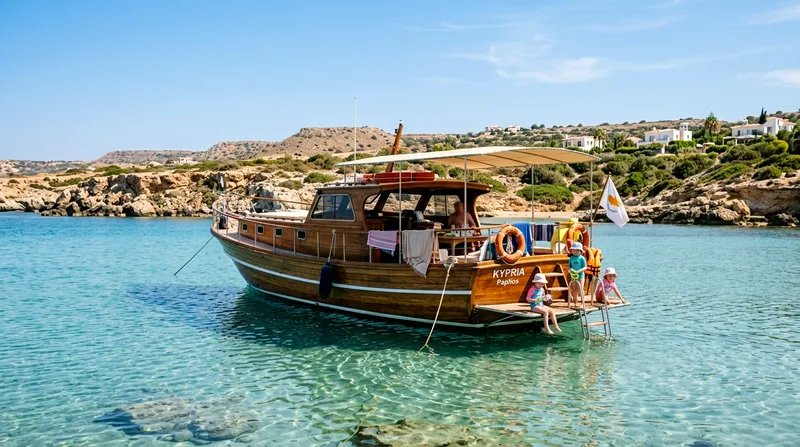
A typical family-oriented day tour in Cyprus covers transport in an air-conditioned minibus, a guide who knows which sites have shade and bathrooms, and a fixed itinerary — often something like Paphos Archaeological Park, the Tombs of the Kings, and a stop at the Blue Lagoon or Akamas viewpoint. Some operators build in child-specific stops: donkey sanctuaries near Limassol, glass-bottom boat rides from Protaras, or a visit to a Troodos village with ice cream built into the schedule. Expect group sizes from 8 to 25 people, pickup from major hotel zones in Paphos, Limassol or Ayia Napa, and a day running roughly 7-8 hours. Private family tours exist too, usually at double or triple the per-person cost of a shared coach tour, but with a schedule you can actually bend.
What DIY sightseeing demands
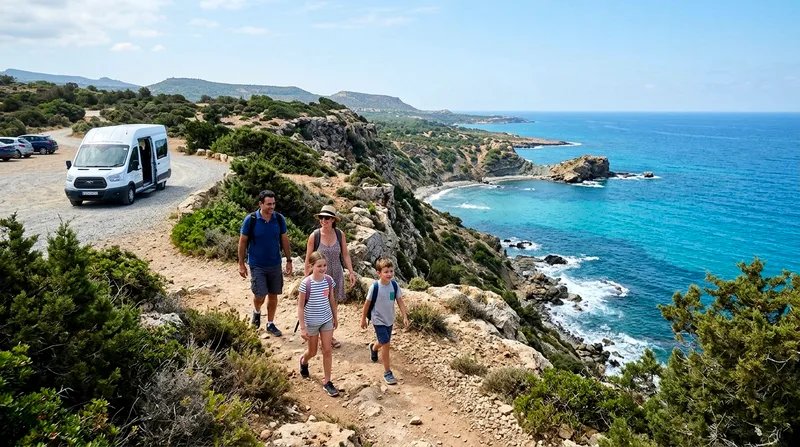
Going it alone means renting a car, planning your own route, and accepting that you're now the tour guide, driver and conflict-resolution team. You'll need to read up on opening hours — the Tombs of the Kings in Paphos closes earlier in winter, for instance — and factor in that Cyprus drives on the left, which trips up a fair number of continental European visitors in the first day or two. You also carry the mental overhead of deciding where to eat, when to stop, and what to do when a child refuses to get back in the car seat at the worst possible moment. It's more work. It's also the only way to actually linger somewhere you like instead of being herded back to the bus in twenty minutes.
Time: How Much You'll Actually Spend
Time is where the comparison gets interesting, because neither option is obviously faster once you account for real family behavior rather than the brochure version.
Tour schedules and flexibility
Tours run on fixed clocks. A hotel pickup at 8:30am means you're up, fed and in the lobby by 8:15, not negotiable — anyone who's tried to get two kids under six dressed and out the door on a deadline knows this is its own stress test. On the plus side, you don't lose time to wrong turns, parking search, or deciding where lunch is; the operator has already solved those problems, usually poorly in the sense that lunch stops are often tourist-trap restaurants near the attraction, charging 20-30% more than a place a street away.
Self-drive planning and delays
Driving yourself adds planning time upfront — an hour or two researching routes and attractions the night before — but gives you control over pacing during the day. The real time cost of DIY isn't driving, it's decision fatigue: every stop is a judgment call, and with kids that often means more stops than planned, not fewer. A 90-minute drive to the Troodos Mountains can easily become a half-day outing once you add a snack break, a wrong turn near a mountain village with no signal, and a toddler who falls asleep five minutes from your destination, forcing an unplanned stop so you don't wake them.
Cost Breakdown: Tours vs Self-Guided
Cost is usually the deciding factor once families actually sit down and do the math, and the math is less dramatic than you'd expect — but it does favor DIY for anyone staying more than three or four days.
For a family of four, self-driving typically costs less overall but demands far more hands-on logistics than a guided tour.
Cyprus family tours vs self-drive sightseeing compared
| Option | Typical cost (family of 4/day) | Flexibility | Logistics effort | Best for |
|---|---|---|---|---|
| Shared coach tour | €150-230 | Low | Minimal | First-timers, toddlers, hot summer days |
| Private family tour | €250-450 (half-day) | Medium | Low | Grandparents, larger families, special needs |
| Self-drive rental car | €60-90 | High | High | Confident drivers, longer stays, flexible routes |
| Public bus/taxi mix | €20-40 | Low-Medium | Medium-High | Budget travelers without a car, short city stays |
Figures are typical ranges for planning purposes; always check current prices when booking, since fuel costs and tour rates shift seasonally.
Tour pricing structure
Shared-coach family day tours in Cyprus typically run €35-75 per adult and €20-45 per child, depending on inclusions like entrance fees, lunch, or a boat trip component. A family of four doing one full-day tour is looking at roughly €150-230 for the day. Multiply that across four or five sightseeing days of a two-week holiday and you're easily at €750-1,100 just in tour fees — before meals outside the tour, souvenirs or extra activities. Private tours cost more, often €250-450 for a half-day with a dedicated driver-guide, which can actually be reasonable value if split across a larger family group.
Hidden DIY costs (car rental, fuel, parking)
A rental car in Cyprus runs roughly €30-55 a day for a mid-size vehicle in high season, often less outside July-August. Add fuel — Cyprus prices sit close to the EU average, so expect €50-70 a week of driving for a typical family itinerary — plus a car seat rental, usually €5-8 a day if the rental company doesn't throw it in free. Parking is cheap or free at most attractions outside central Nicosia and Limassol. Over a two-week stay, a family often spends €500-700 total on car, fuel and parking combined — less than half what the same number of tour days would cost, with the added benefit of having the car for beach days and random stops that no tour would ever include.
Who Should Book a Tour (and Who Shouldn't)
There's no universal right answer here, and anyone telling you tours are always worth it (or never worth it) hasn't actually traveled with small children.
Best for families with young children
If your kids are under 6, visiting in July or August, or you're nervous about driving abroad, book at least one or two guided tours — the Troodos Mountains day trip and an Akamas/Blue Lagoon boat combo are the two most commonly offered and genuinely worth doing with a guide, since both involve driving routes that are more stressful solo with young kids in the car. Grandparents traveling with grandchildren also benefit heavily: less driving stress means more energy for actually enjoying the day. A family with a baby under 12 months should lean toward private tours over shared coaches, since nap schedules rarely survive a group itinerary.
Better to DIY if you prefer independence
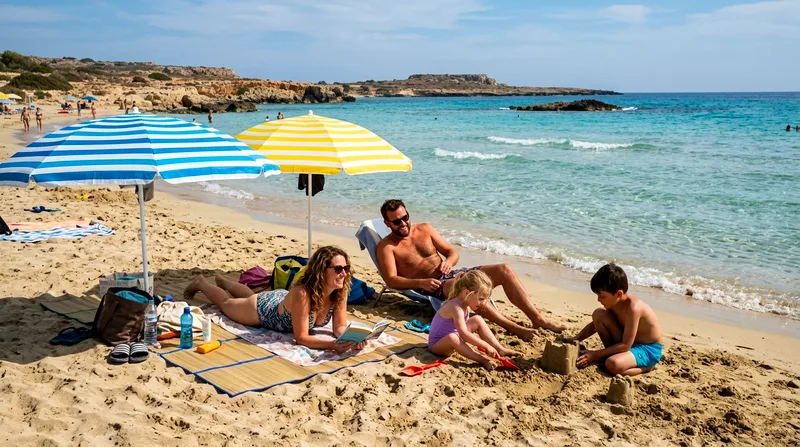
If you're staying more than 10 days, have kids over 8 who can handle a car ride without incident, or you simply dislike being on someone else's clock, rent a car and skip the tours entirely. Cyprus's road network is more forgiving than Crete's mountain switchbacks or Mallorca's congested coastal roads in August, which makes self-driving here a genuinely reasonable choice even for nervous first-timers. You'll also have the freedom to skip a tired child's nap-time sightseeing and just go to the beach instead — something no tour itinerary will ever offer you.
The Verdict: When Tours Justify the Price
Family tours in Cyprus earn their cost in three specific situations: short trips of four days or less where planning time isn't worth sacrificing, trips with children under 6 during peak summer heat, and families without a confident driver willing to handle left-hand traffic and mountain roads. In those cases, paying €150-230 a day for a stress-free, guide-led day is a fair trade, not a luxury.
Outside those scenarios, DIY sightseeing wins on cost and arguably on experience quality — you see Nicosia's old town, the Akamas trails, or a Larnaca beach day at your own pace, not a stranger's. Compare this to Rhodes or Corfu, where public transport between sights is patchier and a rental car becomes close to mandatory regardless of tour preference; Cyprus is one of the few Mediterranean islands where both options are genuinely viable, which is exactly why this decision is worth thinking through rather than defaulting to whichever option your hotel desk pushes hardest. If you're still unsure, book one guided day for the trickiest route — Troodos or Akamas — and self-drive the rest; it's the compromise most experienced family travelers land on anyway.
Frequently asked questions
Are guided family tours in Cyprus worth the cost?
For short stays, families with children under 6, or anyone uneasy about driving abroad, yes — a day tour at €35-75 per adult removes the stress of navigation and car seats. For stays over a week with older kids, self-driving usually delivers better value and more flexibility for the same sightseeing.
What age are kids best suited for Cyprus family tours?
Most shared-coach tours suit children aged 4 and up who can manage a 7-8 hour day with multiple stops. Babies and toddlers under 2 generally do better on private tours or self-drive itineraries, since fixed schedules rarely accommodate naps.
Do family tours in Cyprus include meals and activities?
It varies by operator — some include lunch and entrance fees in the price, others charge these separately. Always check the tour's inclusions before booking, since a tour advertised at €40 can end up costing €60-70 once meals and site tickets are added.
Is it cheaper to rent a car or book a family tour?
Renting a car is almost always cheaper over a stay longer than four days — typically €60-90 a day total for a family of four including fuel and parking, versus €150-230 a day for a shared coach tour covering the same ground.
Can you customize family tours in Cyprus?
Shared-group tours follow a fixed itinerary with little room to change. Private family tours can usually be adjusted — different stops, pacing, or duration — but cost significantly more, often €250-450 for a half-day with a dedicated driver-guide.