Discover the best family beaches in Cyprus with shallow waters, lifeguards, and shade. Plus nearby watersports and activities for kids of all ages.
What Makes a Beach Family-Friendly
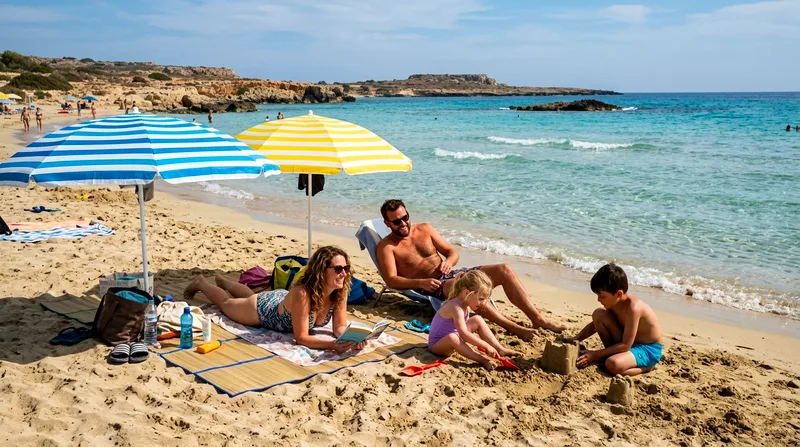
Cyprus has over 60 Blue Flag beaches, a European eco-label the Cyprus Tourism Organisation uses to promote water quality and safety standards across the island. But a Blue Flag alone doesn't make a beach good for a five-year-old. What actually matters for families is simpler and more specific: how far you can walk before the water reaches your waist, whether someone is watching the water, and whether there's shade within reach of the sand.
I'd rank those three factors above sand quality or scenery every time. A beach with fine golden sand and a sharp drop-off six metres out is more dangerous for toddlers than a beach with coarser sand and a 40-metre shallow shelf. Parents who haven't checked this in advance sometimes find themselves hovering anxiously at the water's edge all week instead of relaxing.
The Mediterranean Sea along Cyprus's south and east coasts is generally calmer than the more exposed west coast near Paphos, where afternoon winds pick up. That's worth knowing if you're choosing a base: Agia Napa and Protaras tend to offer flatter water for longer stretches of the day than beaches further west.
Shallow Water Entry and Gradual Slopes
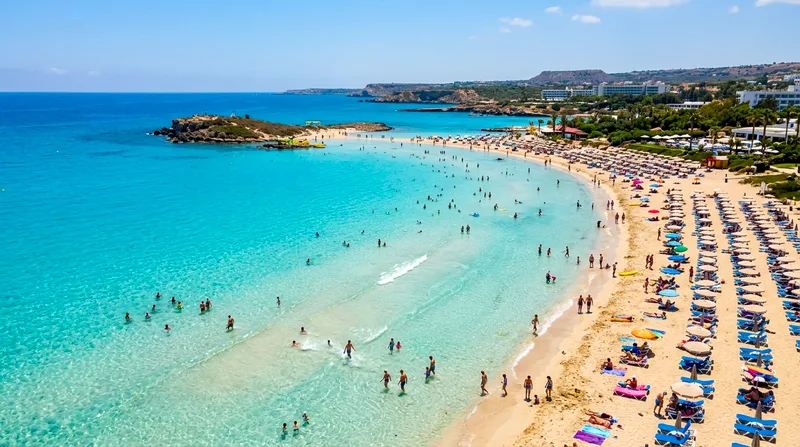
Look for beaches described locally as having a "shallow shelf" — this usually means you can walk out 20 to 50 metres before the water passes chest height on an adult, which translates to knee or waist height for a small child much further out. Nissi Beach in Agia Napa is the standout example: the main bay has a sandbar effect where water stays under a metre deep for a long stretch, partly because the beach curves around a small islet that breaks the swell. Fig Tree Bay in Protaras has a similar gradual slope. By contrast, some coves near Paphos and the Akamas peninsula shelve quickly and suit older kids and confident swimmers better than toddlers.
Lifeguard Presence and Safety Infrastructure
Municipal beaches in Cyprus typically run lifeguard cover from around May through October, usually between 10:30am and 6pm in peak season — but this isn't universal, and smaller or more remote bays often have none at all. Flag systems follow the standard red-yellow-green convention, and it's worth teaching kids to recognise them before you arrive rather than explaining it beach-side. If a beach has no flags flying and no visible lifeguard tower, treat that as a sign to supervise more closely, not as proof the water is safe.
Top Family Beaches in Cyprus
If you only have time to research three areas before booking, make it these: Agia Napa for the most reliably shallow water and busiest amenities, Paphos for a quieter, more scenic option with decent facilities, and Protaras or Larnaca if you want something a notch calmer and less built-up than Agia Napa's main strip. None of these are secret — they're the island's most visited family spots for good reason — so expect company, especially in July and August.
Nissi Beach and Fig Tree Bay offer the shallowest, most reliably lifeguarded water, while Coral Bay wins on playground facilities.
Best family beaches in Cyprus compared: water, facilities and crowds
| Beach | Water Entry | Lifeguards (season) | Shade/Facilities | Crowd Level |
|---|---|---|---|---|
| Nissi Beach (Agia Napa) | Very shallow, gradual | Yes, May-Oct | Sunbeds, bars, toilets | High |
| Makronissos Beach | Shallow, gradual | Yes, May-Oct | Sunbeds, limited shade | Moderate |
| Coral Bay (Paphos) | Moderate, gentle slope | Yes, May-Oct | Playground, restaurants | High |
| Fig Tree Bay (Protaras) | Very shallow, gradual | Yes, May-Oct | Sunbeds, cafes, islet | Moderate-High |
| Mackenzie Beach (Larnaca) | Shallow near shore | Yes, May-Oct | Beach bars, parking | Moderate |
| Finikoudes Beach (Larnaca) | Moderate, narrow strip | Yes, May-Oct | Promenade, cafes | High |
Lifeguard hours and sunbed prices vary by operator and season; confirm current conditions locally before you swim.
Nissi Beach and Agia Napa Area
Nissi Beach is the name most people associate with family swimming in Cyprus, and it earns the reputation on water conditions alone. The 500-metre bay has a shallow, sandy entry on most of its length, sunbed and umbrella rental (expect roughly €10-15 per day for a pair, prices vary by operator), beach bars, toilets, and a lifeguard station during the summer season. The trade-off: it gets loud and crowded by late morning, with music from beach bars carrying across the sand, so it's not the place for a quiet nap with a baby. Families wanting a calmer version nearby should look at Makronissos Beach, a short drive away, which has similar shallow water with noticeably fewer crowds and sunbeds.
Coral Bay and Paphos Region
Coral Bay, north of Paphos town, is a curved sandy beach with a gentler slope than most of the rocky coves typical of this coast. It has a playground directly behind the beach — a genuine rarity in Cyprus, where most beachfront play areas are informal at best — plus restaurants, toilets, showers and lifeguard patrol in season. Parking is plentiful but fills up by midday in August. The water here is slightly cooler and can be choppier in the afternoon than on the south coast, so mornings are the better window for young swimmers. Compare this to Malta's Golden Bay, which has comparable sand and crowds but far less consistent lifeguard cover — Coral Bay is the safer bet if that matters to you.
Beach Facilities and Safety Features
Facilities make the difference between a beach day that works and one that ends in a meltdown by 1pm. Shade is the single biggest limiting factor in Cyprus during July and August, when midday temperatures regularly hit 35°C (95°F) and natural shade is almost nonexistent on open sand. Beaches without rentable umbrellas or shade structures become genuinely risky for small children by late morning.
I'd avoid any beach that doesn't offer at least some shade option, however basic, during peak summer — bringing your own pop-up tent is a reasonable backup, but check first whether the beach restricts personal shade structures, as some managed beaches in Agia Napa do to protect sunbed rental income.
Shade Structures and Amenities
Most organised beaches — Nissi, Coral Bay, Fig Tree Bay — rent umbrellas and sunbeds as a pair for roughly €10-15 a day, with prices higher directly in front of beach bars and cheaper at the quieter ends. Toilets and showers are standard at these beaches and usually free or coin-operated. Changing rooms exist but are often basic — don't expect baby-changing facilities beyond the larger resort-adjacent beaches near Agia Napa and Protaras.
Accessibility and Parking Considerations
Nissi Beach, Coral Bay and Fig Tree Bay all have paved parking within a short walk, though free spaces fill by mid-morning in August and you may end up paying for a private car park (typically €3-5 for the day). Several Cyprus beaches now offer sea-access ramps and amphibious wheelchairs for visitors with mobility needs — Dasoudi Beach in Limassol is a reliable example — but this isn't universal, so if accessibility is essential, confirm with the specific beach or municipality before travelling rather than assuming it's available.
Watersports and Activities for Kids
Calm, shallow water isn't just safer for swimming — it's also what makes beginner watersports workable for kids. The beaches on this list double as decent launch points for gentle activities, and most operators at Nissi, Coral Bay and Fig Tree Bay cater specifically to families rather than adrenaline-seekers.
Paddleboarding and Kayaking Options
Stand-up paddleboard and kayak rental is widely available at Nissi Beach and Fig Tree Bay, usually for around €15-20 per hour, with some operators offering tandem boards suited to a parent paddling with a young child aboard. Kids over about 6 or 7 can usually manage a short supervised paddleboard session in flat water; younger children are better off in a tandem kayak with an adult. Avoid renting equipment on windier afternoons — mid-morning conditions are calmer almost everywhere on the south and east coasts.
Snorkeling and Boat Tours Nearby
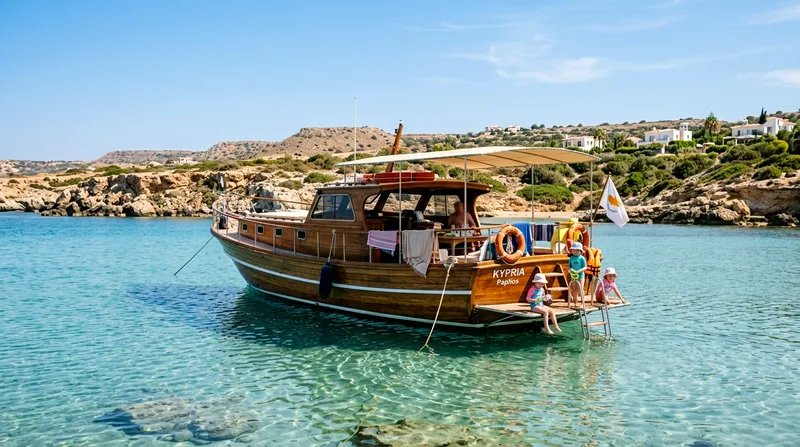
The rocky edges around Coral Bay and the waters near Cape Greco, a short drive from Agia Napa, offer decent shallow snorkeling for kids old enough to use a mask confidently — visibility is generally good, and the seabed near the rocks holds small fish and sea urchins worth pointing out. For something more structured, glass-bottom boat tours run from both Agia Napa harbour and Paphos harbour, typically lasting 1.5 to 2 hours, and are a good option for younger children who aren't ready to snorkel themselves. If you're planning a boat trip, compare current boat tours and prices before you book, since options and timings shift seasonally.
Planning Your Family Beach Day
Cyprus's beach season runs roughly April through October, but the sweet spot for families with young children is May, June and September, when sea temperatures are already comfortable (around 22-24°C) but the air isn't at its July-August peak of 35°C or higher. Compare that to Crete or Rhodes, which run a similar season, or Malta, where summer humidity can feel heavier despite similar temperatures — Cyprus's drier heat is more tolerable for kids but still demands real sun discipline.
Best Times to Visit and Crowds
Arrive before 10am if you want a sunbed without paying a premium or a shaded spot without a hunt — by 11am in August, the main beaches like Nissi and Coral Bay are close to full. Weekdays are calmer than weekends, when local families join the holidaymakers. If your schedule is flexible, shoulder months avoid both the worst heat and the thickest crowds, and hotel rates typically drop too.
What to Bring and Safety Tips
Pack reef-safe sunscreen, a rash vest or UV swimsuit for extended water time, and water shoes — several Cyprus beaches mix sand with patches of pebble or rock near the shoreline, and bare feet suffer. Bring more water than you think you need; shops at the busier beaches charge a premium, and smaller beaches may have no shop at all. Check the flag system before letting kids swim unsupervised near any depth, and if in doubt, ask the lifeguard directly — most speak English and are used to cautious parents asking questions.
Frequently asked questions
Which Cyprus beaches have the shallowest water for toddlers?
Nissi Beach in Agia Napa and Fig Tree Bay in Protaras have the most consistent shallow shelves, with water staying under a metre deep for 20-40 metres from shore in most conditions. Makronissos Beach near Agia Napa offers similarly shallow water with smaller crowds, making it a solid alternative if Nissi feels too busy.
Are lifeguards present at family beaches in Cyprus?
Yes, at the main organised beaches — Nissi, Coral Bay, Fig Tree Bay, Mackenzie and Finikoudes all have lifeguard cover roughly from May to October, typically between late morning and early evening. Smaller, undeveloped coves often have no lifeguard at all, so check before relying on supervision.
What watersports can children do at Cyprus beaches?
Tandem kayaking and beginner paddleboarding are the most accessible options for kids, widely available at Nissi Beach and Fig Tree Bay for roughly €15-20 per hour. Snorkeling near Coral Bay or Cape Greco suits confident swimmers, while glass-bottom boat tours from Agia Napa or Paphos harbours work well for younger children.
Which family beaches have the best facilities and shade?
Coral Bay stands out for its beachfront playground alongside standard facilities, while Nissi Beach and Fig Tree Bay offer the widest range of rentable sunbeds, umbrellas, toilets and food options. All three get crowded by midday in summer, so shade availability depends on arriving early.
What is the best time to visit family beaches in Cyprus?
May, June and September offer warm sea temperatures (around 22-24°C) without the full intensity of July-August heat, plus smaller crowds. If you must travel in peak summer, aim to be at the beach before 10am to secure shade and parking.