Plan your Kourion day trip with ticket prices, guided tours from Limassol, and a half-day itinerary. Visit Cyprus's best-preserved ancient site.
What is Kourion and why visit
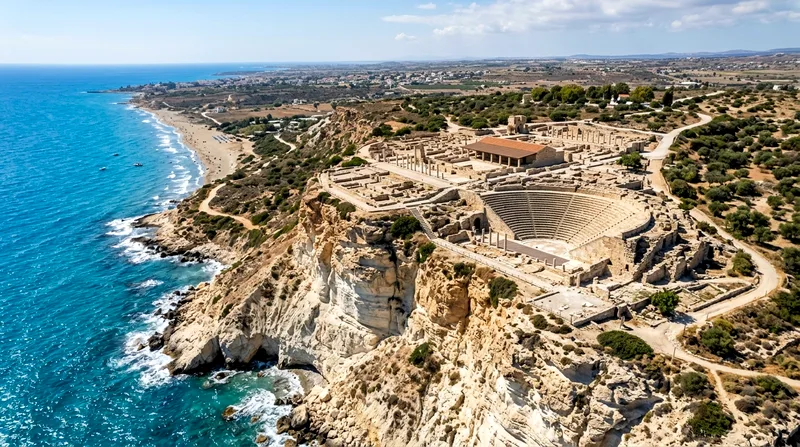
Kourion sits on a limestone escarpment about 70 meters above the Mediterranean, roughly 19 kilometers west of Limassol near the village of Episkopi. It was one of the most important city-kingdoms of ancient Cyprus, inhabited from the Neolithic period but flourishing under Greek and then Roman rule. A devastating earthquake in 365 AD leveled much of the city, which is partly why so much lies preserved in collapsed but legible layers for archaeologists today.
What makes a Kourion day trip worth the drive isn't just the ruins — it's the setting. Few ancient sites in the Mediterranean combine Roman engineering with a sea view this direct. Compare it to Kato Paphos's mosaics, which are more intricate but flat and inland, or to Rhodes's Acropolis of Lindos, which has similar cliff drama but charges more and draws heavier cruise-ship crowds. Kourion feels less managed, more open to wander.
History and highlights
The site's standout structure is the Greco-Roman theatre, originally built in the 2nd century BC and later expanded by the Romans to seat around 3,500 spectators. It's been partially restored and still hosts occasional performances in summer — worth checking local listings if you want to see it in use rather than empty. Beyond the theatre, the House of Eustolios contains some of the best-preserved mosaic floors on the island, depicting birds, fish, and geometric patterns from the early Christian period. The House of the Gladiators, named for its mosaic scenes of combat, is another highlight, though parts are roped off and viewed from walkways rather than walked on.
What you'll see on site
Beyond the theatre and mosaic houses, the site includes a Roman forum, an early Christian basilica with surviving column bases, and a public bath complex. About a kilometer from the main site — reachable by a short drive or a 15-minute walk along the access road — is the Sanctuary of Apollo Hylates, a separate ticketed area where Apollo was worshipped as protector of the woods. Its reconstructed columns and altar are genuinely atmospheric, and most visitors underestimate how much time it deserves. Don't rush this part just because it's a separate car park from the main theatre.
Getting to Kourion independently
Driving yourself is, honestly, the better option for most visitors. Kourion isn't remote, the roads are good, and parking is free and plentiful — advantages that guided tours from Limassol can't really beat unless you specifically want narration or don't want to drive.
Driving yourself is the cheapest and most flexible way to do a Kourion day trip, while guided tours trade cost for convenience and context.
Kourion day trip options compared: cost, time and convenience
| Option | Travel time from Limassol | Approx. cost | Flexibility | Best for |
|---|---|---|---|---|
| Self-drive (rental/own car) | 25–30 min | Free parking + ~€4.50 entry | High | Independent travelers, families |
| Taxi one-way | 25–30 min | Approx. €35–45 | Low | Couples without a rental car |
| Half-day guided tour | 4–5 hrs round trip incl. visit | Mid-range, varies by operator | Medium | Solo travelers, first-time visitors |
| Full-day guided tour | 7–9 hrs incl. extra stops | Higher, varies by operator | Low | Visitors combining Kourion with Paphos |
| Public bus + walk | Variable, limited routes | Low bus fare, no taxi cost | Very low | Budget travelers with time to spare |
Typical figures; tour pricing and bus schedules vary by season and operator, so check current details before booking.
By car and parking
From central Limassol, the drive takes about 25–30 minutes via the A6 highway, exiting toward Episkopi and following signs for Kourion. There's a free gravel and tarmac car park directly at the main entrance, large enough that overcrowding is rarely an issue outside of July and August. A second, smaller car park serves the Sanctuary of Apollo Hylates, a short drive further along the same access road. If you're staying in Paphos instead, the drive is closer to 45 minutes along the same highway — a reasonable detour if you're already touring the Akrotiri Peninsula or Aphrodite's Rock area.
Public transport options
This is Kourion's weak point. There's no direct, frequent public bus service running straight to the site. Limited rural bus routes connect Limassol to Episkopi village, but from there it's still a 3-kilometer walk uphill to the entrance — not pleasant in summer heat and impractical if you're also visiting the sanctuary. Taxis from Limassol cost roughly €35–45 one-way depending on traffic, which only makes financial sense if you're splitting the fare across a group or combining it with other stops. For most independent travelers without a car, a half-day guided tour or a rental car for the day works out more reliable than relying on buses.
Guided tours from Limassol
Half-day tours typically run 4–5 hours including hotel pickup from Limassol, covering Kourion and often one additional stop such as the Sanctuary of Apollo or Kolossi Castle nearby. Full-day options extend further west, sometimes bundling in Paphos's archaeological park or Aphrodite's Rock, which makes for a long but thorough day if you're short on time in Cyprus. Compare this to a Crete day trip pairing Knossos with Heraklion — similar structure, similar logic: one major ruin plus a secondary stop keeps the pace sustainable without rushing either site.
Half-day and full-day tours
Half-day tours typically run 4–5 hours including hotel pickup from Limassol, covering Kourion and often one additional stop such as the Sanctuary of Apollo or Kolossi Castle nearby. Full-day options extend further west, sometimes bundling in Paphos's archaeological park or Aphrodite's Rock, which makes for a long but thorough day if you're short on time in Cyprus. Compare this to a Crete day trip pairing Knossos with Heraklion — similar structure, similar logic: one major ruin plus a secondary stop keeps the pace sustainable without rushing either site.
What's included in tours
Most organized tours include hotel or central Limassol pickup, air-conditioned transport, a licensed guide, and entry tickets bundled into the price. Lunch is sometimes included on full-day itineraries but rarely on half-day ones, so check before you book. What's usually not included: bottled water, tips, and any extra sites visited independently afterward. Always compare current prices and inclusions before booking, since operators vary on what's bundled versus optional.
Tickets and entry information
Entry to Kourion is inexpensive compared to equivalent sites on Crete or Rhodes, and there's no need to book ahead — tickets are sold at the gate and the site rarely sells out.
Entry fees and passes
Standard adult admission to the main Kourion site is typically around €4.50, with reduced rates for students and seniors, and free entry for young children. The Sanctuary of Apollo Hylates requires a separate ticket, usually priced similarly at a few euros. Cyprus occasionally offers combined multi-site passes covering Kourion alongside Kolossi Castle or Paphos's archaeological park — worth asking about at the ticket booth since prices and bundling change periodically. Always confirm current prices when booking or on arrival, since official fees are adjusted from time to time.
Opening hours and duration
Kourion is generally open daily, with longer hours in summer (roughly 8am–7:30pm) and shorter winter hours (roughly 8am–5pm), though exact closing times shift with daylight saving changes. Plan for 2–3 hours at the main site and another 30–45 minutes at the Sanctuary of Apollo if you're visiting both — a realistic half-day outing of 3–4 hours total including the drive from Limassol.
Best time to visit Kourion
Timing matters more at Kourion than at most Cyprus attractions, mainly because there's almost no shade across the entire site. The limestone and marble surfaces reflect heat aggressively by midday.
Seasonal weather and crowds
April, May, and October offer the best balance — daytime temperatures around 22–26°C, green surrounding hillsides in spring, and noticeably thinner crowds than July or August, when temperatures regularly exceed 33°C and the site becomes genuinely uncomfortable by late morning. Cruise and coach tour groups tend to arrive from Limassol between 10am and 1pm, so visiting outside that window avoids the worst of both heat and crowds. Winter (December–February) is mild and quiet, around 15–18°C, and a legitimate option if you don't mind occasional rain.
Ideal visiting hours
Arrive at opening time, ideally by 8:30am, or come back in the last two hours before closing. Both windows give you softer light for photos of the theatre and sea views, cooler temperatures, and noticeably fewer people blocking the mosaic viewing platforms. Midday visits aren't ruined, but they're the least rewarding version of the experience — flat light, harsh heat, and the theatre's photogenic sea backdrop washed out by glare.
Nearby attractions and add-ons
One advantage of basing a Kourion day trip from Limassol is how much sits within a 15–20 minute drive, letting you build a fuller day around the ruins without much extra driving.
Beaches and coastal sites
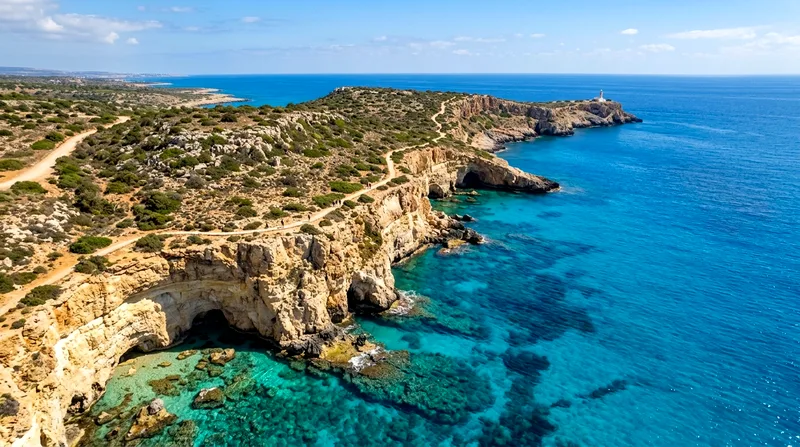
Kourion Beach sits directly below the cliffs and is a reasonable spot for a swim after the site visit, though it's undeveloped compared to Limassol's organized beaches — bring your own umbrella and water. Governor's Beach, about 25 minutes east, has distinctive white chalk cliffs and a few beachside tavernas, making it a better lunch stop. The Akrotiri Peninsula, just south, offers Lady's Mile Beach and the Akrotiri Salt Lake, which attracts flamingos in winter months — a different kind of stop if ruins alone feel like enough history for one day.
Other archaeological sites nearby
Kolossi Castle, a 15th-century Crusader fortress, is about 10 minutes from Kourion and pairs naturally with a half-day itinerary — small enough to see in 30–40 minutes. Sanctuary of Apollo Hylates, already mentioned, should really be treated as part of the same visit rather than a separate trip. Further afield, Paphos's UNESCO-listed mosaics and the Tombs of the Kings are about 45 minutes west, reasonable for a full-day combination but tiring if squeezed into the same day as Kourion. If you've already done Knossos on Crete or Ialysos near Rhodes, Kourion's scale will feel more manageable — less sprawling, easier to cover thoroughly in one visit.
Frequently asked questions
How much does it cost to visit Kourion?
Standard adult entry to the main Kourion site is typically around €4.50, with reduced rates for students, seniors, and free entry for young children. The Sanctuary of Apollo Hylates nearby requires a separate ticket at a similar price. Fees are adjusted periodically, so confirm current pricing at the gate or when booking a tour that includes entry.
Can you visit Kourion without a tour?
Yes, and for most drivers it's the better option. The site has clear signage, informational panels at each major structure, and a free car park at the entrance. You won't get a guide's historical commentary, but a site map (often available at the ticket booth) covers the layout well enough for independent exploration.
How long does a Kourion day trip take?
Budget 2–3 hours for the main site plus 30–45 minutes at the Sanctuary of Apollo Hylates. Including the 25–30 minute drive each way from Limassol, a full round trip typically runs 3.5 to 4.5 hours — easily done as a half-day outing with time left for a beach stop or lunch in Episkopi.
What is the best time of year to visit Kourion?
April, May, and October offer the best combination of mild temperatures (around 22–26°C) and thinner crowds. Summer months bring heat above 33°C with almost no shade on site, while December through February is cooler and quiet but occasionally wet. Early morning or late afternoon visits are better than midday regardless of season.
What other sites can you visit near Kourion?
Kolossi Castle is about 10 minutes away and takes 30–40 minutes to see. Kourion Beach sits directly below the cliffs for a post-visit swim, and the Akrotiri Peninsula with its salt lake and Lady's Mile Beach is roughly 15–20 minutes south. Paphos's mosaics and Tombs of the Kings are about 45 minutes further west for a fuller day.