Cyprus catamaran vs speedboat tour compared: comfort, price, group size, and seasickness risk, so you pick the right boat trip for Paphos or Ayia Napa.
Quick Comparison: Catamaran vs Speedboat
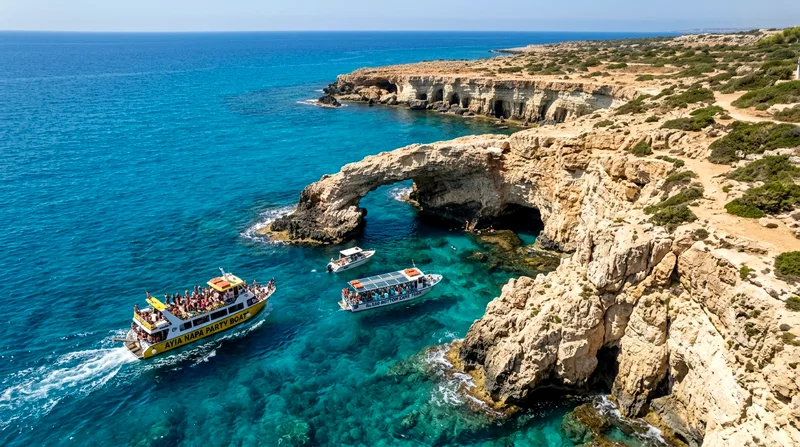
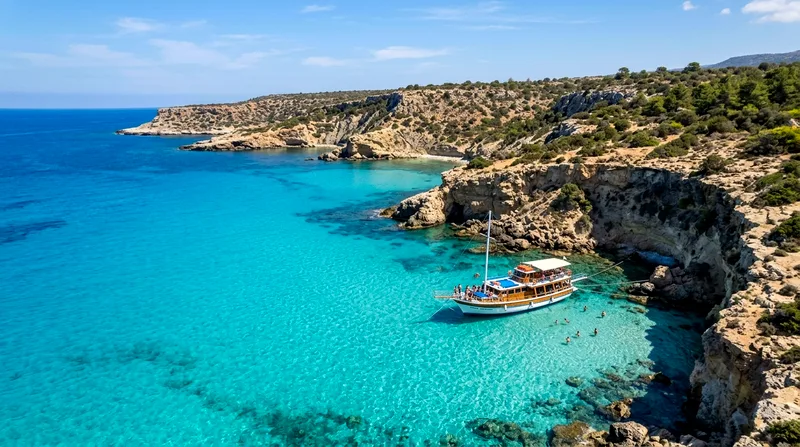
Cyprus's coastline — from the Akamas Peninsula down to Ayia Napa — gets explored by two very different kinds of boats, and the Cyprus catamaran vs speedboat tour question comes up constantly once travelers start browsing excursions out of Paphos or Limassol. Both get you onto the Mediterranean Sea and both typically stop at swim spots like the Blue Lagoon, but the experience on board couldn't be more different.
A catamaran is a twin-hulled sailing or motor vessel, usually 15 to 25 meters long, built to carry anywhere from 40 to 150 passengers on a wide, stable deck. A speedboat is smaller, faster, and built for maybe 8 to 12 people, prioritizing acceleration and sharp turns over space or shade. One is a floating lounge; the other is closer to a theme park ride with a sea view.
I'd say the catamaran wins for most travelers simply because Cyprus boat trips tend to run four to six hours, and that's a long time to be gripping a handrail on a small, bouncing hull. But the speedboat has a real audience too — younger groups, thrill-seekers, and anyone who wants a two-hour adrenaline hit rather than a slow cruise with buffet lunch.
Catamarans win on comfort and value for longer trips, while speedboats win on speed and small-group intimacy.
Cyprus catamaran vs speedboat tour compared: comfort, cost, and group size
| Vessel | Typical Trip Length | Group Size | Comfort Level | Seasickness Risk | Best For |
|---|---|---|---|---|---|
| Catamaran | 4-6 hours | 40-150 passengers | High, stable deck | Low | Families, couples, full-day cruises |
| Speedboat | 2-3 hours | 8-12 passengers | Low, bouncy ride | Moderate to high | Thrill-seekers, small groups, anglers |
Typical figures; exact capacity, duration, and pricing vary by operator and season, so check details before booking.
Comfort and Stability
This is where the two vessels diverge most sharply. A catamaran's twin-hull design spreads weight across two floats rather than one, which cuts down on rocking significantly compared to a single-hull boat of similar size. Add a wider beam and a full deck, and you get something that feels more like a stable platform than a boat — even with moderate chop. A speedboat, by contrast, sits low and narrow, and it's designed to lift and slap across waves rather than glide over them. That's part of the appeal if you like the physical sensation of speed, but it's also why your lower back and knees will feel it after two hours.
Cost and Value
Price is rarely the deciding factor on its own, but it does shift the value equation. Speedboat tours in Cyprus are typically priced per person for shorter trips — often two to three hours — and because they carry fewer passengers, the per-head cost doesn't drop much with group size. Catamaran cruises usually run longer, four to six hours including lunch or snorkeling stops, and the larger passenger count spreads the operating cost further, which is why a full-day catamaran trip often ends up cheaper per hour of actual sea time than a speedboat outing.
Neither type publishes fixed national pricing — it varies by operator, season, and route — so always compare current prices when booking rather than relying on last summer's numbers.
Seasickness Risk and Motion
This is the practical question most people actually care about before they book. Catamarans are inherently more stable because the dual-hull design resists rolling, the primary motion that triggers seasickness in most people. Speedboats bounce and jolt, especially at speed in anything beyond flat calm water, and that abrupt vertical motion is harder on the inner ear than a catamaran's gentler sway.
Who Should Choose Which?
Neither vessel is objectively superior — it's about matching the boat to your group, your tolerance for motion, and what kind of day you actually want on the water. I'd steer most families, senior travelers, and first-time visitors toward the catamaran by default, and reserve the speedboat for groups specifically chasing speed.
Frequently asked questions
Is a catamaran or speedboat better for seasickness?
The catamaran is significantly better. Its dual-hull design resists the rolling motion that causes most seasickness, while a speedboat's bouncing over waves is harder on the inner ear. If you're unsure how you'll react, choose the catamaran and sit mid-ship, where motion is felt least.
Which option is cheaper: catamaran or speedboat tour?
Per hour of time on the water, catamarans usually offer better value since multi-hour trips often include lunch, drinks, and snorkeling gear in one price. Speedboat tours are shorter and charge per person with fewer inclusions, so check what's actually bundled before comparing the headline price.
How many people typically go on each type of tour?
Catamarans commonly carry 40 to 150 passengers depending on the vessel size, making them a social, higher-energy experience. Speedboats are capped around 8 to 12 people, giving a quieter, more personal dynamic with direct skipper interaction throughout the trip.
Can you see the same sights from both vessels?
Mostly yes — both typically pass the Blue Lagoon, stretches of the Akamas Peninsula, and coastal routes near Paphos or Ayia Napa. Speedboats can tuck into narrower coves and sea caves that larger catamarans can't reach, so the sightseeing isn't identical even on similar routes.
Which is more comfortable for a full-day excursion?
The catamaran, without much debate. Shade, seating variety, toilet access, and stable decks make five or six hours manageable, while a speedboat's lack of shade and constant bouncing becomes uncomfortable well before the two-hour mark for most passengers.